

The United States government’s approach to cryptocurrency regulation has reached a critical juncture as Federal Bitcoin policy decisions face unprecedented obstacles due to severe data collection disruptions. In recent months, government agencies responsible for monitoring digital asset markets have encountered significant challenges stemming from administrative shutdowns and budget constraints, leaving policymakers navigating uncharted territory without essential market intelligence. This Federal Bitcoin policy paralysis comes at a particularly crucial moment when the nation is considering strategic Bitcoin reserve initiatives and comprehensive regulatory frameworks that could reshape the entire cryptocurrency landscape for decades to come.
The ramifications of these data gaps extend far beyond Washington’s corridors of power, directly impacting investors, blockchain enterprises, and the broader digital economy. As regulatory uncertainty deepens, stakeholders across the cryptocurrency ecosystem are demanding clarity on how federal Bitcoin policy decisions will evolve despite these information deficits. The shutdown’s cascading effects have created a vacuum of reliable government data precisely when strategic choices about Bitcoin’s role in America’s financial future require informed, evidence-based decision-making.
The Root Causes Behind Federal Bitcoin Policy Data Disruptions
Government Shutdown Impact on Cryptocurrency Data Collection
The fundamental challenge facing federal Bitcoin policy decisions stems from systematic disruptions to data collection infrastructure across multiple government agencies. When federal operations experience shutdowns or funding limitations, the Securities and Exchange Commission, Commodity Futures Trading Commission, and Treasury Department face reduced capacity to monitor cryptocurrency markets, track transaction flows, and analyze blockchain network activities. These agencies rely on continuous data streams to assess market stability, detect fraudulent activities, and evaluate systemic risks within the digital asset ecosystem.
During shutdown periods, essential personnel are furloughed, automated monitoring systems may operate with limited oversight, and inter-agency data sharing protocols become fragmented. The federal Bitcoin policy framework depends heavily on real-time market intelligence to inform regulatory proposals, yet these information channels have experienced significant interruptions. Without comprehensive data on trading volumes, price volatility patterns, institutional adoption rates, and cross-border cryptocurrency flows, policymakers essentially operate with blindfolds when making critical decisions about Bitcoin’s integration into America’s financial architecture.
Budget Constraints Affecting Regulatory Technology Infrastructure
Beyond temporary shutdowns, chronic underfunding of regulatory technology infrastructure has created persistent gaps in federal Bitcoin policy decisions. Government agencies tasked with cryptocurrency oversight often operate with outdated analytical tools, insufficient computational resources, and understaffed data science teams compared to their private sector counterparts. The blockchain industry evolves at breakneck speed, introducing new protocols, decentralized finance mechanisms, and layer-two scaling solutions that require sophisticated monitoring capabilities.
Federal regulators struggle to maintain pace with these innovations when budget allocations fail to reflect the complexity and scope of modern cryptocurrency markets. This technological deficit directly impacts the quality of federal Bitcoin policy formulation, as decision-makers lack granular insights into emerging trends, market manipulation attempts, and potential vulnerabilities in digital asset infrastructure. The resulting information asymmetry places government agencies at a disadvantage when designing regulations intended to protect consumers while fostering innovation within the blockchain sector.
How Data Gaps Compromise Strategic Bitcoin Reserve Proposals
Surrounding Bitcoin Holdings and Valuation Models
One of the most consequential areas affected by data limitations involves proposals for a strategic Bitcoin reserve similar to America’s gold holdings. Federal Bitcoin policy decisions regarding reserve accumulation require precise valuation methodologies, custody security assessments, and long-term price trajectory models. However, government shutdowns have disrupted the continuous data collection necessary to develop robust analytical frameworks for Bitcoin as a strategic asset.
Policymakers need comprehensive historical data on Bitcoin’s correlation with traditional assets, its performance during various economic cycles, and its liquidity characteristics across different market conditions. Without complete datasets spanning recent shutdown periods, federal Bitcoin policy architects cannot confidently project the reserve’s potential impact on national financial stability or its effectiveness as an inflation hedge. This uncertainty has stalled legislative initiatives and delayed executive branch decisions about Bitcoin reserve implementation timelines.
Risk Assessment Challenges for National Bitcoin Strategy
The absence of reliable, uninterrupted data creates significant challenges for risk management frameworks essential to federal Bitcoin policy decisions. Government analysts require continuous monitoring of network security metrics, mining pool concentration, exchange reserve levels, and derivatives market positioning to assess systemic risks associated with Bitcoin adoption at the sovereign level. Data gaps from shutdown periods create blind spots in these risk assessments, potentially leading to underestimation of vulnerabilities or overestimation of benefits.
Furthermore, the federal Bitcoin policy landscape must account for geopolitical considerations, including other nations’ cryptocurrency strategies, international regulatory coordination efforts, and potential adversarial uses of digital assets. Comprehensive intelligence gathering across these dimensions demands consistent interagency collaboration and data integration—capabilities severely compromised by administrative disruptions. The resulting information deficits force policymakers to make consequential decisions based on incomplete intelligence rather than comprehensive analysis.
Impact on the Cryptocurrency Industry and Market Participants

Regulatory Uncertainty Affecting Business Planning
The private sector bears direct consequences from data gap-induced delays in federal Bitcoin policy decisions. Cryptocurrency exchanges, blockchain infrastructure providers, and digital asset investment firms require regulatory clarity to make strategic business decisions, allocate capital efficiently, and ensure compliance with evolving standards. When government data collection falters and policy formulation stalls, businesses face prolonged uncertainty that inhibits long-term planning and innovation investment.
This regulatory ambiguity particularly affects institutional investors evaluating Bitcoin exposure for pension funds, endowments, and corporate treasuries. Without clear federal Bitcoin policy guidelines informed by robust government analysis, institutional allocators adopt conservative approaches that may limit Bitcoin’s integration into mainstream finance. The resulting market hesitation can suppress innovation, discourage entrepreneurship, and potentially position American firms at a competitive disadvantage relative to international competitors operating under clearer regulatory frameworks.
Market Volatility and Investor Confidence Concerns
Data gaps affecting federal Bitcoin policy decisions contribute to increased market volatility as traders and investors react to policy uncertainty. Bitcoin markets are particularly sensitive to regulatory signals from major economies, and the absence of clear, data-driven policy direction from U.S. authorities creates information vacuums often filled by speculation and rumor. Price swings intensify when market participants lack confidence in the government’s understanding of cryptocurrency dynamics and its capacity to implement thoughtful regulations.
Moreover, the perception that federal Bitcoin policy is being formulated without adequate data undermines investor confidence in the entire digital asset ecosystem. Retail and institutional participants alike prefer markets governed by informed, evidence-based regulations rather than policies developed amidst information deficits. This confidence crisis can trigger capital outflows, suppress market liquidity, and ultimately hinder Bitcoin’s maturation as an asset class within the American financial system.
Comparative Analysis: International Bitcoin Policy Approaches
European Union’s Data-Driven Cryptocurrency Framework
While the United States grapples with data gaps hindering federal Bitcoin policy decisions, the European Union has implemented comprehensive data collection mechanisms supporting its Markets in Crypto-Assets Regulation. European regulators maintained consistent data gathering throughout the period when U.S. agencies faced shutdown-related disruptions, enabling more coherent policy development. The EU’s approach demonstrates how sustained data infrastructure investment facilitates informed cryptocurrency regulation.
The European Securities and Markets Authority and European Banking Authority leverage continuous market monitoring, transaction reporting requirements, and industry engagement to maintain robust datasets informing policy evolution. This data-driven methodology has allowed the EU to develop nuanced regulations balancing innovation encouragement with consumer protection—objectives that also underpin federal Bitcoin policy goals in America but remain compromised by information deficits.
Asian Nations’ Strategic Bitcoin Positioning
Several Asian jurisdictions have advanced their cryptocurrency policies, while U.S. federal Bitcoin policy decisions remain stalled by data challenges. Singapore’s Monetary Authority maintains sophisticated surveillance systems tracking digital asset flows, enabling responsive regulatory adjustments. Similarly, Hong Kong has leveraged comprehensive data collection to craft licensing frameworks for cryptocurrency exchanges and investment products.
These international examples highlight the competitive disadvantage American policymakers face when data gaps compromise federal Bitcoin policy development. As other nations establish clear regulatory environments supported by robust market intelligence, the United States risks losing its position as the preferred jurisdiction for cryptocurrency innovation and capital formation. This geopolitical dimension adds urgency to resolving the data collection deficiencies that currently hinder American Bitcoin policy formulation.
Technical Solutions for Data Gap Mitigation
Blockchain Analytics and On-Chain Data Integration
Despite government shutdown impacts on federal Bitcoin policy decisions, blockchain technology’s inherent transparency offers potential solutions for data continuity. Public blockchain networks provide immutable transaction records accessible regardless of government operational status. Federal agencies could leverage blockchain analytics platforms that aggregate on-chain data, providing continuous market intelligence even during administrative disruptions.
Integrating commercial blockchain analytics tools into government monitoring infrastructure could help maintain data flow supporting federal Bitcoin policy development during future shutdowns. Companies specializing in cryptocurrency market surveillance offer real-time dashboards tracking network activity, exchange flows, and market microstructure—capabilities that complement traditional regulatory data collection. While privacy and security considerations must be carefully addressed, strategic partnerships between government agencies and blockchain analytics firms could significantly reduce vulnerability to shutdown-induced data gaps.
Public-Private Data Sharing Partnerships
Another approach to strengthening federal Bitcoin policy decisions involves establishing formalized data-sharing agreements between government regulators and private sector participants. Cryptocurrency exchanges, custodians, and financial institutions possess granular market data that could supplement government collection efforts, particularly during periods of reduced federal capacity. Structured partnerships with clear data protection protocols could ensure policymakers maintain access to essential market intelligence regardless of administrative circumstances.
These public-private collaborations supporting federal Bitcoin policy would require careful framework design addressing competitive sensitivities, privacy protections, and data security requirements. However, successful implementation could create resilient information ecosystems less vulnerable to government shutdowns while providing regulators with more comprehensive market visibility. Industry participants often express willingness to cooperate with regulatory authorities when engagement mechanisms respect commercial interests and contribute to sensible policy outcomes.
Legislative and Executive Branch Response Strategies
Congressional Oversight and Funding Priorities
Addressing the data gaps compromising federal Bitcoin policy decisions requires Congressional action to ensure adequate, consistent funding for cryptocurrency regulatory infrastructure. Legislative oversight committees have begun examining how shutdown-induced data collection disruptions impact policy quality and market oversight effectiveness. Bipartisan recognition of cryptocurrency’s growing economic significance has sparked discussions about protected funding mechanisms that could insulate critical regulatory functions from budget impasses.
Congress could establish dedicated appropriations for cryptocurrency monitoring and analysis that remain available during continuing resolutions and partial shutdowns, ensuring federal Bitcoin policy development maintains data continuity. Additionally, legislative mandates for enhanced reporting requirements, standardized data collection protocols, and interagency coordination could create more resilient information architecture supporting long-term policy planning in the digital asset space.
Executive Agency Coordination and Resource Allocation
The executive branch holds significant authority to improve data infrastructure supporting federal Bitcoin policy decisions through interagency coordination and resource reallocation. The White House could establish a dedicated cryptocurrency policy working group with representatives from Treasury, SEC, CFTC, Federal Reserve, and other relevant agencies, creating streamlined data sharing and coordinated analytical efforts. Such coordination would maximize existing resources and reduce redundancies in cryptocurrency monitoring efforts.
Executive directives could also prioritize technology modernization within regulatory agencies, allocating resources for cloud computing infrastructure, machine learning capabilities, and data science talent recruitment. Enhanced technological capacity would enable more sophisticated analysis supporting federal Bitcoin policy even when staff levels are temporarily reduced. Presidential leadership signaling cryptocurrency policy as a strategic priority could catalyze the organizational and budgetary changes necessary to overcome current data deficiencies.
Long-Term Implications for American Bitcoin Adoption
Institutional Investment and Financial Integration Trajectory
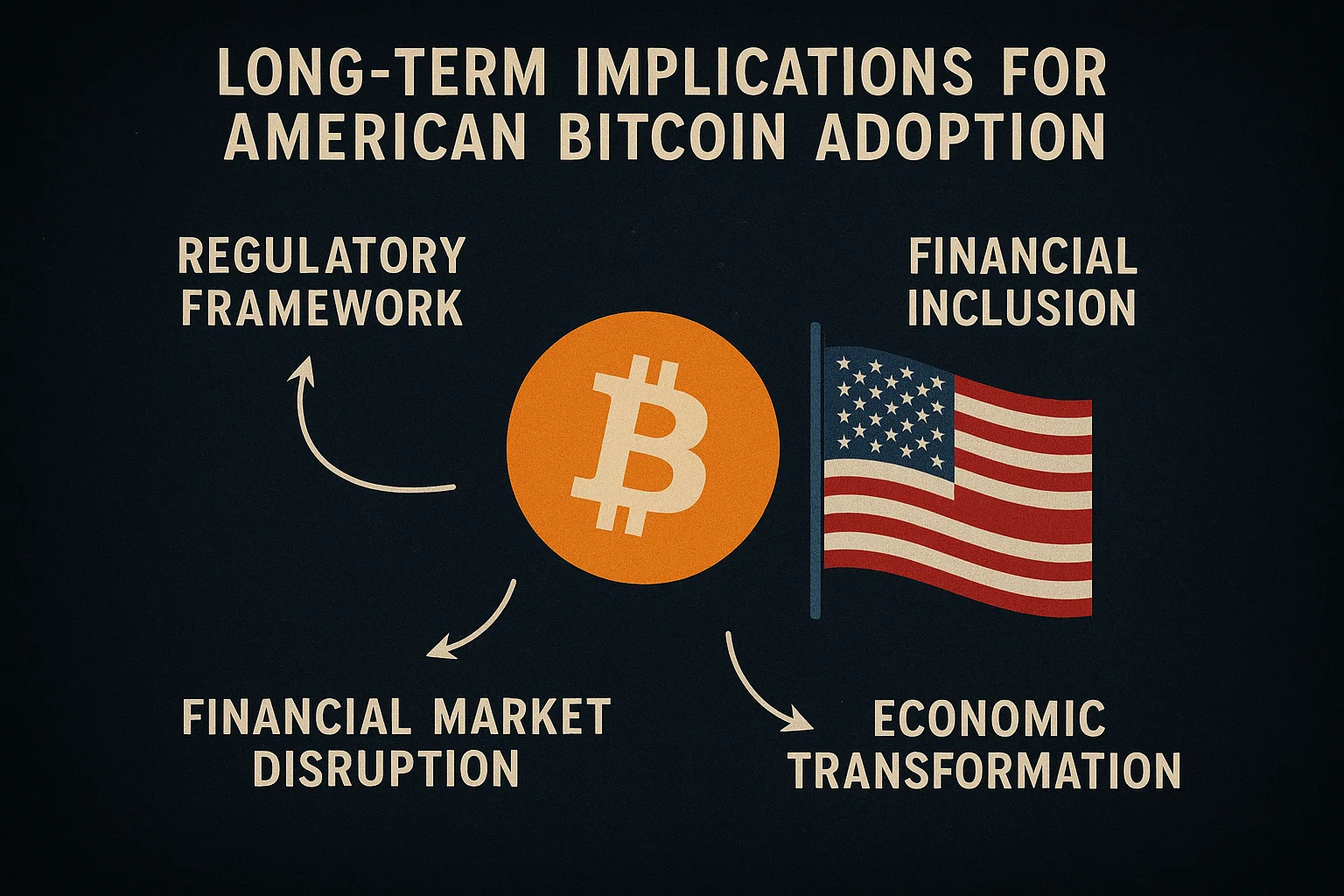
The data gaps currently hindering federal Bitcoin policy decisions have profound implications for Bitcoin’s trajectory within American financial markets. Institutional investors managing trillions in assets await clear regulatory guidance before significantly expanding Bitcoin allocations. Prolonged policy uncertainty stemming from information deficits may delay this institutional adoption, potentially limiting Bitcoin’s role in retirement accounts, endowment portfolios, and corporate balance sheets.
If federal Bitcoin policy development remains compromised by data challenges, American institutional capital may flow toward other jurisdictions offering greater regulatory clarity. This capital migration could diminish the United States’ influence over global cryptocurrency market evolution and reduce economic benefits from blockchain industry growth. Conversely, successfully resolving data infrastructure weaknesses could position America to capture disproportionate value from Bitcoin’s financial integration, reinforcing dollar dominance and supporting technological leadership.
Innovation Ecosystem and Technology Leadership Concerns
Beyond financial considerations, data gap-induced delays in federal Bitcoin policy decisions affect America’s position within the global blockchain innovation ecosystem. Entrepreneurs and technologists often locate operations in jurisdictions providing clear regulatory frameworks supported by the government’s understanding of cryptocurrency dynamics. When U.S. policymakers appear unable to gather basic market intelligence due to administrative dysfunction, innovators may question whether America can provide the stable, informed regulatory environment necessary for blockchain business success.
The brain drain and capital flight resulting from inadequate federal Bitcoin policy development could undermine America’s technology leadership across multiple sectors increasingly dependent on blockchain infrastructure. From supply chain management to digital identity systems, blockchain applications extend far beyond financial speculation. Ensuring robust data infrastructure supporting informed cryptocurrency regulation thus becomes essential not only for Bitcoin market development but for maintaining American competitiveness across the broader technology landscape.
Expert Perspectives and Industry Stakeholder Views
Regulatory Thought Leaders on Data-Driven Policy
Cryptocurrency policy experts consistently emphasize that effective federal Bitcoin policy decisions must rest on comprehensive, reliable data foundations. Former regulatory officials have publicly criticized the data collection deficiencies caused by government shutdowns, arguing that policymaking without adequate information risks unintended consequences. Academic researchers studying cryptocurrency regulation point to the correlation between data quality and policy effectiveness, noting that jurisdictions with superior market intelligence tend to develop more nuanced, successful regulatory frameworks.
Industry thought leaders advocate for permanent funding solutions, ensuring continuous data collection supporting federal Bitcoin policy, regardless of broader budget disputes. They argue that cryptocurrency markets’ 24/7 global nature demands regulatory infrastructure operating with similar continuity. The consensus among experts suggests that resolving current data challenges requires treating cryptocurrency market monitoring as an essential government function warranting protected resources and operational priority.
Cryptocurrency Industry Coalition Recommendations
Major cryptocurrency industry associations have submitted detailed recommendations for improving data infrastructure supporting federal Bitcoin policy decisions. These coalitions propose standardized reporting frameworks that industry participants would voluntarily adopt, creating consistent data flows to regulators even during government shutdowns. Industry groups also advocate for public-private partnerships leveraging commercial blockchain analytics capabilities to supplement government monitoring.
The cryptocurrency sector’s willingness to enhance data transparency supporting federal Bitcoin policy reflects recognition that clear, informed regulation ultimately benefits market development. Industry participants understand that policy uncertainty and data deficiencies create barriers to mainstream adoption and institutional participation. By proactively offering solutions to data gap challenges, the cryptocurrency industry demonstrates maturity and commitment to constructive regulatory engagement that could accelerate policy resolution.
Pathway Forward: Recommendations for Data Infrastructure Resilience
Short-Term Emergency Measures
Immediate action to address federal Bitcoin policy decisions hindered by data gaps should include emergency appropriations for critical cryptocurrency monitoring functions, implementation of temporary commercial data service subscriptions, and activation of contingency protocols ensuring basic market surveillance during shutdowns. Federal agencies could establish memoranda of understanding with industry data providers, allowing rapid access to market intelligence when government collection capabilities are compromised.
These emergency measures supporting federal Bitcoin policy would provide stopgap solutions while more comprehensive infrastructure improvements are developed. Regulatory agencies should also document specific data deficiencies encountered during recent shutdowns, creating detailed inventories of information needs that guide future investment priorities. This assessment would ensure resource allocation targets the most consequential data gaps affecting policy quality and market oversight effectiveness.
Long-Term Structural Reforms
Sustainable solutions for federal Bitcoin policy decisions require structural reforms addressing the root causes of data vulnerability. Congress should establish protected funding streams for cryptocurrency regulatory infrastructure, potentially through dedicated fees collected from industry participants. Federal agencies need technology modernization programs emphasizing cloud-based systems with high availability architectures less susceptible to operational disruptions.
Long-term federal Bitcoin policy data resilience also demands workforce development initiatives attracting data scientists, blockchain engineers, and quantitative analysts to government service. Competitive compensation, access to cutting-edge technologies, and meaningful policy impact opportunities could help regulatory agencies recruit the talent necessary for sophisticated cryptocurrency market analysis. Combined with organizational culture changes emphasizing data-driven decision-making, these structural reforms would fundamentally strengthen the information foundations underlying America’s Bitcoin policy development.
Conclusion
The challenges facing Federal Bitcoin policy decisions due to data gaps caused by government shutdowns represent more than temporary administrative inconveniences—they expose fundamental vulnerabilities in America’s cryptocurrency regulatory infrastructure. As Bitcoin evolves from speculative asset to potential strategic reserve and mainstream financial instrument, policymakers require continuous, comprehensive market intelligence to make informed decisions protecting consumers, fostering innovation, and maintaining financial stability.
Resolving these data deficiencies demands coordinated action across legislative, executive, and industry stakeholders. Congress must prioritize consistent funding for cryptocurrency monitoring capabilities, executive agencies need to modernize technological infrastructure and enhance interagency coordination, and the private sector should engage constructively through data sharing partnerships. The pathway to effective federal Bitcoin policy decisions runs through robust, resilient information systems capable of operating regardless of political and budgetary circumstances.
Read More: Bitcoin Price Drops Below $96K: Fed Rate Cut Impact
