

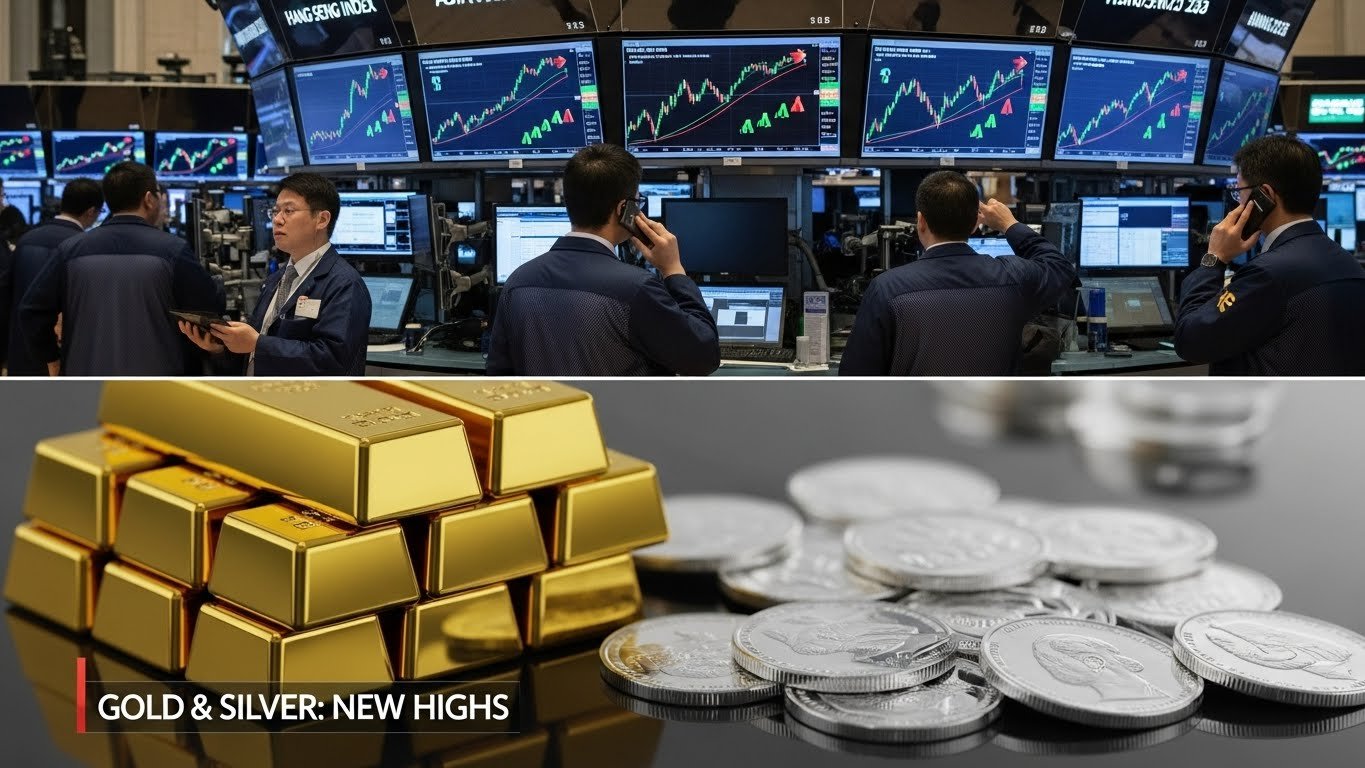
Asian markets opened the week with modest gains as trading volumes remained thin due to holiday schedules across the region. Investors appeared cautious yet optimistic, balancing year-end positioning with a watchful eye on global macroeconomic developments. Equities in Tokyo, Shanghai, and Hong Kong edged higher, reflecting broad investor confidence, while safe-haven assets like gold and silver surged to fresh highs amid lingering uncertainty in currency and bond markets.
The interplay between thin holiday trading and increased demand for precious metals paints a nuanced picture of market behavior. Reduced liquidity tends to amplify price swings, particularly in commodities, while equities react to both domestic policy signals and global cues. This environment highlights the growing significance of Asian market trends, precious metals performance, and risk-on versus risk-off investor behavior during seasonal trading periods.
This article explores the drivers behind the rise in Asia markets, the factors pushing gold and silver to record levels, and the broader implications for investors navigating the holiday-thinned trading landscape. By examining market liquidity, safe-haven flows, and regional economic indicators, readers will gain a comprehensive understanding of the current investment climate.
Asia Markets Gain Amid Thin Holiday Liquidity
Tokyo, Shanghai, and Hong Kong Lead Modest Advances
Asian equity indices edged higher, with Tokyo’s Nikkei 225, Shanghai Composite, and Hong Kong’s Hang Seng showing incremental gains. Investors were cautious, largely constrained by reduced trading activity due to holiday schedules. Nevertheless, modest optimism stemmed from corporate earnings releases, favorable economic data, and stabilizing currency trends.
Trading in holiday-thinned sessions tends to amplify even minor flows, making each trade potentially more influential. As a result, even small volumes of buying interest contributed to the observed upward momentum in key indices. Analysts note that thin liquidity often results in heightened volatility, requiring careful monitoring by both institutional and retail participants.
The Role of Domestic and Global Drivers
Regional markets reacted to a combination of domestic policy updates and global macroeconomic cues. Japan’s industrial output and China’s manufacturing data provided confidence in regional economic resilience, while global indicators, including U.S. employment figures and European monetary policy hints, influenced risk sentiment.
Investors are particularly focused on the delicate balance between stimulus measures, interest rate trajectories, and geopolitical uncertainties. This context explains why Asian equities were able to edge higher despite low trading volumes, reflecting underlying optimism tempered by caution.
Gold and Silver Surge to Fresh Highs
Safe-Haven Demand Intensifies
Gold and silver reached fresh highs as investors sought refuge amid thin market liquidity and uncertainty over global growth. The precious metals market often benefits from risk-off sentiment, currency volatility, and inflation concerns, all of which were present in the current trading period.
Gold’s appeal as a store of value and hedge against currency fluctuations has been reinforced by central bank actions and global inflationary pressures. Silver, with both industrial and investment demand, mirrored gold’s strength while also benefiting from seasonal trading dynamics that tend to favor metals during periods of portfolio repositioning.
Influence of Macro Factors on Precious Metals
Several macroeconomic factors contributed to the surge in gold and silver. Currency fluctuations, particularly against the U.S. dollar, played a central role. A softer dollar generally enhances the appeal of precious metals priced in dollars, allowing international investors to participate more actively.
Additionally, lingering concerns over global economic growth, debt levels, and geopolitical risks provided further justification for safe-haven accumulation. Analysts observe that holiday-thinned trading sessions often magnify these moves, leading to sharper-than-expected increases in metal prices.
Interconnection Between Equities and Precious Metals
Risk-On versus Risk-Off Dynamics
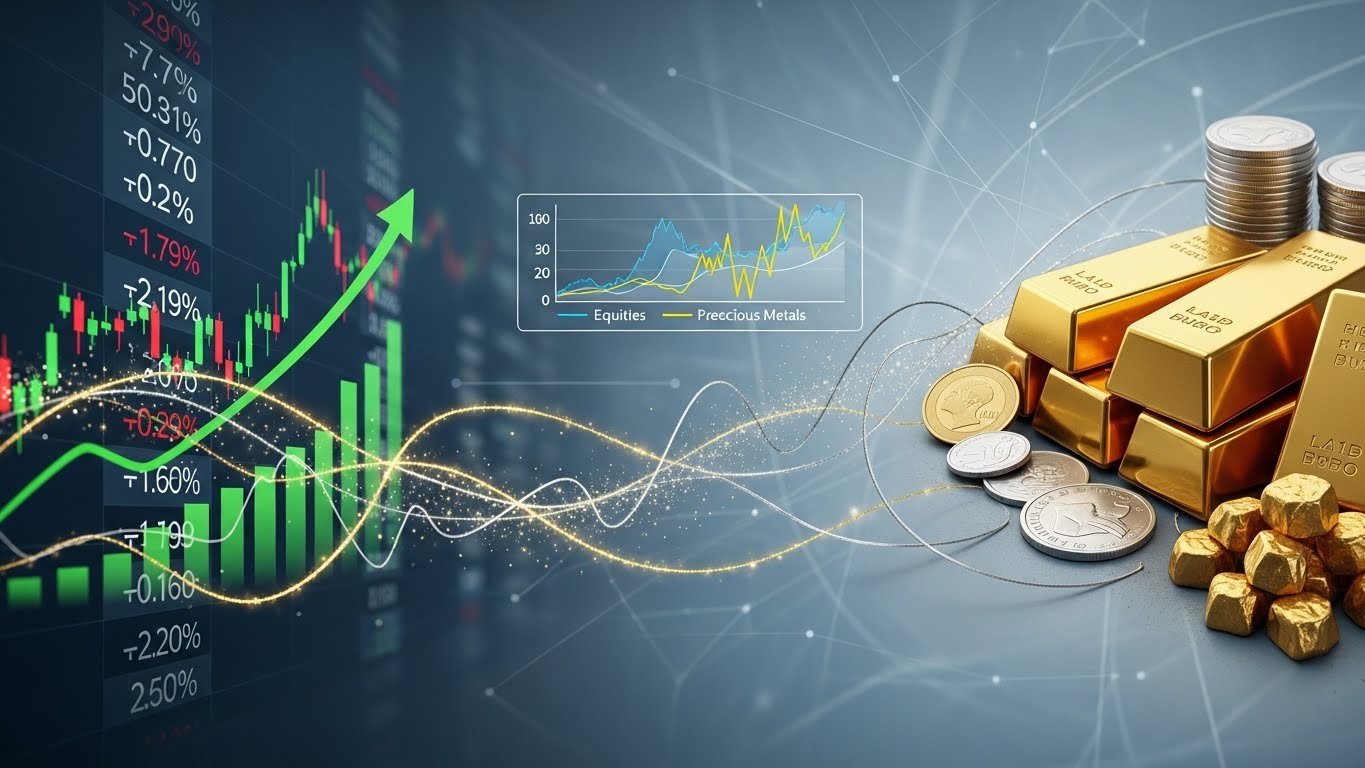
The rise in both equities and precious metals highlights the complex interplay between risk-on and risk-off sentiment. While equities typically benefit from positive growth expectations, safe-haven assets rise when uncertainty dominates. During holiday-thinned trading, these dynamics can coexist, as small capital flows disproportionately affect markets.
Investors often rebalance portfolios, allocating portions to both growth-oriented and defensive assets. This dual approach reflects a cautious optimism, where market participants hedge against potential volatility while participating in upward trends in equities.
Portfolio Implications for Investors
For portfolio managers, the concurrent rise in equities and precious metals suggests a need for diversification strategies that account for seasonal liquidity patterns and macroeconomic uncertainty. Allocating capital to both risk assets and safe havens can reduce downside exposure while capturing modest gains in thinly traded markets.
The behavior of gold and silver also provides a signal of investor sentiment, with increasing prices indicating continued caution despite equity market gains.
Regional Economic Indicators Driving Markets
Japan’s Industrial Output and Manufacturing Data
Japan’s recent industrial output figures indicated resilience in key sectors, supporting investor confidence in Tokyo markets. Manufacturing trends, including exports and production indices, signaled stability amid global uncertainties. These data points reinforced the notion that Asian markets could maintain modest gains even in holiday-thinned trading sessions.
China’s Economic Activity and Policy Support
China’s manufacturing data and policy measures played a complementary role in shaping market sentiment. Evidence of steady production, coupled with government initiatives to support economic growth, provided reassurance to investors, particularly in Shanghai and Hong Kong. The combination of domestic policy support and measured global economic signals contributed to the broader regional optimism observed during the period.
Liquidity and Its Role in Market Movements
Thin Trading Amplifies Volatility
Holiday-thinned trading inherently reduces market depth, making even minor buy or sell orders more impactful. This reduced liquidity can amplify volatility in both equities and commodities, leading to sharper price swings. Investors must be aware that market behavior during these periods may not reflect underlying fundamentals fully, but rather the effects of temporary liquidity constraints.
Implications for Trading Strategies
Traders often adapt strategies during low-liquidity periods by scaling positions, adjusting stop levels, and monitoring broader market flows. Awareness of liquidity-driven volatility is essential to avoid overreacting to price movements that may normalize once regular trading resumes.
Safe-Haven Flows and Currency Considerations
U.S. Dollar and Currency Movements
The relative strength or weakness of the U.S. dollar has a direct impact on gold and silver prices. A softer dollar increases the purchasing power of international buyers and supports upward momentum in precious metals. Currency fluctuations also influence investor allocations between equities and metals, particularly during thin holiday sessions.
Geopolitical and Macro Risk Factors
Ongoing geopolitical tensions, debt concerns, and inflationary pressures globally contribute to safe-haven demand. Gold and silver benefit from these dynamics as investors seek assets insulated from systemic risk. The holiday-thinned environment amplifies these flows, resulting in sharper-than-normal price increases.
Technical Analysis of Equities and Metals
Key Support and Resistance Levels in Asian Markets
Equity indices like the Nikkei 225, Shanghai Composite, and Hang Seng are influenced by both historical and near-term technical levels. In the current trading environment, upward momentum tested prior resistance levels, with limited volume creating potential volatility if prices approach major barriers.
Technical Drivers for Gold and Silver
Gold and silver are trending toward new highs, with short-term technical indicators reflecting bullish momentum. Analysts note that thin trading sessions may exaggerate technical breakouts, emphasizing the importance of monitoring volume and confirmation once liquidity returns.
Implications for Investors and Traders
Managing Risk During Holiday-Thinned Trading
Investors should exercise caution during periods of low liquidity. Small market movements can trigger disproportionate reactions, particularly in leveraged positions. Awareness of holiday-induced volatility is crucial for both short-term traders and long-term investors.
Strategic Portfolio Adjustments
The current environment suggests opportunities for diversification. Investors may consider balancing equity exposure with safe-haven assets like gold and silver to navigate both growth and uncertainty. Monitoring regional economic signals, currency fluctuations, and technical indicators can help optimize positioning.
Broader Market Outlook

Expectations as Trading Volumes Normalize
As holiday schedules conclude and trading volumes increase, markets may experience a normalization in price behavior. Volatility observed during thin trading is likely to subside, and clearer trends may emerge across equities and precious metals.
Long-Term Implications for Asian Markets
The modest gains in Asian markets, combined with strong performance in gold and silver, highlight investor confidence tempered by caution. These dynamics may influence portfolio strategies well into the new year, providing insights into market sentiment and risk appetite.
Conclusion
Asia markets edged higher amid holiday-thinned trading, reflecting cautious optimism supported by regional economic indicators. At the same time, gold and silver reached fresh highs as safe-haven demand intensified in a low-liquidity environment. The simultaneous rise of equities and precious metals underscores the complexity of market dynamics, where optimism coexists with risk mitigation strategies.
For investors, understanding the influence of reduced liquidity, macroeconomic signals, and safe-haven flows is essential for navigating both equities and commodities. The current holiday-thinned period provides valuable lessons in market behavior, risk management, and strategic allocation, with implications that extend beyond the seasonal trading window.
FAQs
Q: Why did Asian markets rise despite thin holiday trading volumes?
Asian markets rose due to a combination of positive regional economic data, corporate earnings, and cautious investor optimism. Thin trading volumes amplified even modest buying flows, contributing to upward price movements.
Q: What factors drove gold and silver to fresh highs during this period?
Gold and silver surged due to safe-haven demand amid global uncertainties, currency fluctuations, and inflationary concerns. Thin holiday trading amplified these movements, resulting in sharper-than-normal price increases.
Q: How does holiday-thinned trading affect market volatility?
Low liquidity during holiday periods makes markets more sensitive to small trades, increasing short-term volatility in both equities and commodities. Investors must account for this when managing positions.
Q: Should investors adjust their portfolios during low-volume trading periods?
Investors may consider diversifying portfolios between equities and safe-haven assets like gold and silver. Awareness of liquidity-driven volatility and regional economic signals is crucial for strategic allocation.
Q: What is the long-term significance of these market movements?
The modest gains in Asian markets and the strong performance of precious metals reflect cautious optimism and risk management strategies. These trends provide insight into investor sentiment and can influence portfolio strategies beyond the holiday period.
