

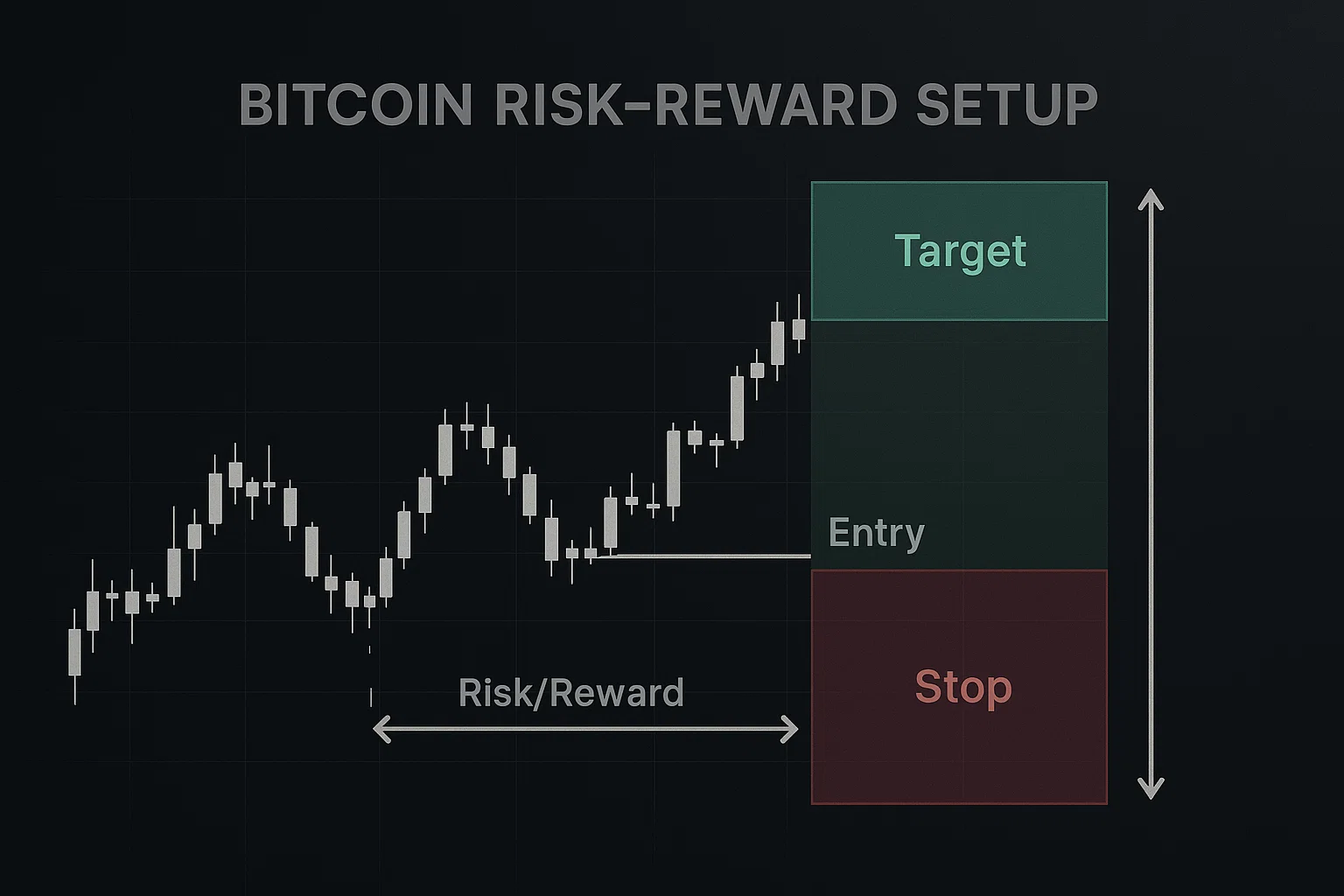
Today, analysts are drawing compelling parallels between current market conditions and the extraordinary Bitcoin risk-reward setup that emerged during the COVID-19 pandemic in 2020. This comparison isn’t merely nostalgic—it represents a potentially transformative investment opportunity that savvy investors cannot afford to ignore.
During March 2020, when global markets crashed amid pandemic fears, Bitcoin plummeted to approximately $3,800 before embarking on a historic rally that eventually propelled it beyond $69,000. Now, market experts suggest we’re witnessing a similar configuration of risk versus potential reward, creating what many consider one of the most attractive entry points in recent cryptocurrency history. Understanding this Bitcoin risk-reward setup requires examining multiple factors, including market psychology, technical indicators, macroeconomic conditions, and institutional adoption patterns.
COVID-Era Bitcoin Market Dynamics
The 2020 Market Crash and Recovery
The COVID-19 pandemic triggered unprecedented volatility across all financial markets in March 2020. Bitcoin experienced a catastrophic drop of nearly 50% in a single day, falling from over $7,900 to below $4,000. This crash created widespread panic among investors, with many questioning cryptocurrency’s viability as a store of value. However, those who recognized the Bitcoin risk-reward setup during this period of maximum fear positioned themselves for generational wealth accumulation.
What made the COVID-era opportunity so exceptional was the convergence of several critical factors. First, central banks worldwide initiated massive monetary stimulus programs, injecting trillions of dollars into the global economy. This unprecedented quantitative easing raised concerns about fiat currency devaluation, directing attention toward Bitcoin’s fixed supply of 21 million coins. Second, the forced digital transformation of society accelerated mainstream cryptocurrency adoption. Third, institutional investors began recognizing Bitcoin as “digital gold” and a legitimate portfolio diversification tool.
Key Characteristics of COVID-Style Market Conditions
The Bitcoin COVID-style risk-reward pattern exhibits several distinctive characteristics that current market observers are identifying again. Extreme volatility creates emotional capitulation among retail investors, leading to oversold conditions on technical indicators. Fear and uncertainty dominate market sentiment, with media narratives amplifying negative perspectives. However, beneath this surface turbulence, fundamental adoption metrics continue strengthening while long-term holders accumulate positions.
Another defining feature involves the disconnect between short-term price action and long-term value trajectory. During the COVID crash, Bitcoin’s fundamentals remained intact despite dramatic price declines. The network’s hash rate recovered quickly, transaction volumes remained healthy, and development activity continued unabated. Smart investors who focused on these fundamental indicators rather than price volatility captured extraordinary returns.
Current Market Conditions Mirroring the COVID Setup
Technical Analysis and Price Patterns
Contemporary technical analysis reveals striking similarities between current Bitcoin price patterns and those observed during early 2020. The Bitcoin risk-reward setup manifests through several key technical indicators that suggest undervaluation relative to potential upside. The Relative Strength Index (RSI) shows readings in oversold territory, historically associated with major bottoming formations. Moving average convergence-divergence (MACD) indicators display positive divergences, suggesting weakening downward momentum despite recent price consolidation.
Additionally, on-chain metrics provide compelling evidence supporting the COVID-style comparison. The Market Value to Realized Value (MVRV) ratio—which compares Bitcoin’s market capitalization to its realized capitalization—indicates that current holders are experiencing minimal unrealized profits. Historically, low MVRV readings have preceded major bull market advances. The spent output profit ratio (SOPR) similarly suggests that most recent Bitcoin transactions occur at or near break-even prices, characteristic of market bottoms.
Macroeconomic Parallels Creating Opportunity
The macroeconomic landscape today shares critical parallels with the COVID era, enhancing the Bitcoin risk-reward setup thesis. While we’re not experiencing a pandemic-induced lockdown, global economic uncertainty remains elevated due to geopolitical tensions, banking sector instability, and persistent inflation concerns. Central banks face the challenging dilemma of combating inflation while avoiding recession, creating an environment where traditional safe-haven assets may underperform.
Bitcoin’s response to these conditions has matured significantly since 2020. The cryptocurrency has evolved from a speculative asset into a recognized hedge against monetary debasement and systemic financial risks. Major financial institutions now offer Bitcoin investment products, regulatory frameworks are developing globally, and corporate treasuries hold BTC as a balance sheet asset. These developments provide stronger fundamental support than existed during the COVID crash, potentially amplifying the reward side of the current risk-reward equation.
Institutional Adoption Amplifying the Setup

Wall Street’s Growing Bitcoin Exposure
Institutional adoption represents perhaps the most significant difference between the current Bitcoin risk-reward setup and the COVID-era opportunity. In 2020, institutional participation was nascent, with only a handful of forward-thinking companies allocating capital to cryptocurrency. Today, the landscape has transformed dramatically. Spot Bitcoin exchange-traded funds (ETFs) have accumulated billions in assets, providing traditional investors with regulated access to BTC exposure.
Major asset manager, including BlackRock, Fidelity, and Franklin Templeton, have launched Bitcoin investment products, legitimizing cryptocurrency within mainstream finance. This institutional infrastructure creates a more stable foundation for price appreciation than existed during the COVID period. When institutional capital flows accelerate during favorable market conditions, the resulting demand can rapidly exhaust available supply, potentially driving more explosive price movements than previous cycles.
Corporate Treasury Adoption Trends
Companies incorporating Bitcoin into their treasury strategies represent another pillar supporting the enhanced Bitcoin COVID-style risk-reward opportunity. MicroStrategy, Tesla, Block (formerly Square), and numerous other corporations have allocated portions of their cash reserves to Bitcoin, treating it as a superior store of value compared to fiat currency. This trend continues expanding as more CFOs recognize the long-term purchasing power erosion affecting traditional cash holdings.
Corporate adoption provides price support by removing Bitcoin from the circulating supply for extended periods. Unlike retail investors who might panic-sell during volatility, corporations typically adopt multi-year holding strategies aligned with treasury management objectives. This dynamic creates an asymmetric supply-demand situation where available Bitcoin decreases while potential buyers multiply, setting the stage for significant price appreciation when market sentiment shifts positively.
Risk Factors Investors Must Consider
Regulatory Uncertainty and Government Actions
While the Bitcoin risk-reward setup presents compelling upside potential, investors must carefully evaluate associated risks. Regulatory uncertainty remains a significant concern across multiple jurisdictions. Governments worldwide are developing cryptocurrency regulations, and unfavorable policy decisions could temporarily suppress prices or limit market access. The United States, European Union, and other major economies continue refining their regulatory approaches, creating potential volatility as policies evolve.
However, regulatory maturation ultimately benefits Bitcoin’s long-term prospects by providing clarity and legal frameworks that enable broader adoption. The current regulatory uncertainty might actually enhance the risk-reward profile by temporarily depressing prices below fair value, creating an opportunity for investors willing to accept short-term policy risks in exchange for long-term appreciation potential.
Market Volatility and Timing Challenges
Bitcoin’s characteristic volatility presents both opportunity and risk within the current market setup. The Bitcoin risk-reward setup becomes most attractive when prices are depressed, but accurately timing market bottoms proves extremely difficult even for experienced investors. Dollar-cost averaging strategies can mitigate timing risk by spreading purchases across multiple price points, reducing the impact of short-term volatility on overall portfolio performance.
Investors should prepare psychologically for continued volatility even after establishing positions. The path from market bottom to new all-time highs rarely follows a straight line. COVID-era investors who purchased Bitcoin near $4,000 endured several 20-30% corrections during the subsequent bull market. Conviction in the fundamental thesis and disciplined position sizing help investors maintain holdings through inevitable drawdowns.
Strategic Approaches to Capitalizing on the Setup
Position Sizing and Portfolio Allocation
Capitalizing on the Bitcoin COVID-style risk-reward opportunity requires thoughtful position sizing aligned with individual risk tolerance and investment objectives. Financial advisors traditionally recommend limiting cryptocurrency exposure to 1-5% of total investment portfolios for conservative investors, while more aggressive allocators might dedicate 10-20% to digital assets. The appropriate allocation depends on factors including age, income stability, existing wealth, and comfort with volatility.
Within cryptocurrency allocations, Bitcoin typically deserves the largest position due to its established network effects, liquidity, and institutional adoption. While alternative cryptocurrencies might offer higher potential returns, they generally carry substantially greater risks. The current market setup favors Bitcoin specifically due to its maturity and the institutional infrastructure supporting it, making BTC the primary focus for investors seeking COVID-style risk-reward profiles.
Long-Term Holding Versus Trading Strategies
The Bitcoin risk-reward setup rewards patient investors who can maintain conviction through market cycles. Historical analysis demonstrates that Bitcoin’s most substantial gains accrue to long-term holders who survive volatility rather than traders attempting to time short-term movements. The COVID-era example proves instructive: investors who purchased near the $4,000 bottom and held through subsequent corrections captured returns exceeding 1,000% over the following year.
However, some investors prefer active management strategies involving periodic profit-taking and position adjustments. Such approaches can reduce portfolio volatility and provide psychological comfort during corrections. The optimal strategy depends on individual temperament and investment philosophy. Regardless of chosen approach, establishing core positions during periods exhibiting favorable risk-reward characteristics—like the current setup—provides the foundation for long-term wealth accumulation.
Technical Indicators Supporting the COVID Comparison
On-Chain Metrics Revealing Accumulation
Advanced on-chain analysis provides quantitative support for the Bitcoin risk-reward setup thesis. The accumulation address metric shows that long-term holders continue adding to positions despite recent price weakness, mirroring behavior observed during the COVID crash. When experienced investors who understand Bitcoin’s fundamentals accumulate aggressively, it typically signals undervaluation and impending price appreciation.
The exchange reserve metric—tracking Bitcoin held on cryptocurrency exchanges—has declined steadily, indicating that investors are moving coins into cold storage for long-term holding. This supply reduction creates the preconditions for supply squeezes when demand increases. During the COVID recovery, similar exchange outflows preceded Bitcoin’s explosive rally from $10,000 to $69,000 between September 2020 and November 2021.
Network Fundamentals Remaining Robust
Bitcoin’s underlying network fundamentals demonstrate strength despite price consolidation, supporting the Bitcoin COVID-style risk-reward narrative. The network hash rate—measuring computational power securing the blockchain—has reached record levels, indicating that miners remain confident in Bitcoin’s long-term value proposition. High hash rates enhance network security and demonstrate the robustness of Bitcoin’s proof-of-work consensus mechanism.
Transaction counts and fee revenues similarly reflect healthy network utilization. While not matching peak bull market activity, these metrics show sustained engagement from users conducting actual Bitcoin transfers rather than pure speculation. This distinction matters because genuine utility provides more sustainable price support than speculative mania. The current metrics profile resembles early 2020 conditions: subdued activity creating opportunity before mainstream attention returns.
Learning from COVID-Era Success Stories
Case Studies of Successful Investors
Examining how investors capitalized on the 2020 Bitcoin risk-reward setup provides valuable lessons for today’s opportunity. Institutional investors like Paul Tudor Jones publicly announced Bitcoin allocations during mid-2020, citing concerns about monetary inflation and currency debasement. Jones compared Bitcoin to gold in the 1970s, recognizing its potential as an emerging store of value asset class.
Individual investors who maintained discipline during the COVID crash similarly achieved life-changing returns. Those who recognized that Bitcoin’s fundamental value proposition remained intact despite temporary price weakness positioned themselves for substantial wealth creation. The psychological challenge involved acting when fear peaked, and media narratives turned overwhelmingly negative—precisely when the risk-reward equation became most favorable.
Mistakes to Avoid Based on Historical Patterns
History also teaches cautionary lessons about mistakes investors should avoid when confronting the current Bitcoin risk-reward setup. Excessive leverage represents perhaps the greatest danger, as borrowing to purchase cryptocurrency amplifies losses during volatility and can force liquidations at unfavorable prices. The COVID crash demonstrated how leveraged positions get wiped out even when the fundamental thesis proves correct over longer timeframes.
Another common mistake involves panic selling during inevitable corrections. Bitcoin’s path from $4,000 to $69,000 included multiple 30-50% drawdowns that shook out weak hands. Investors who sold during these corrections missed subsequent recoveries and underperformed those who simply held through volatility. Establishing appropriate position sizes that allow comfortable holding through drawdowns prevents emotional decision-making during stressful market conditions.
The Role of Bitcoin Halving Cycles
Supply Reduction Dynamics
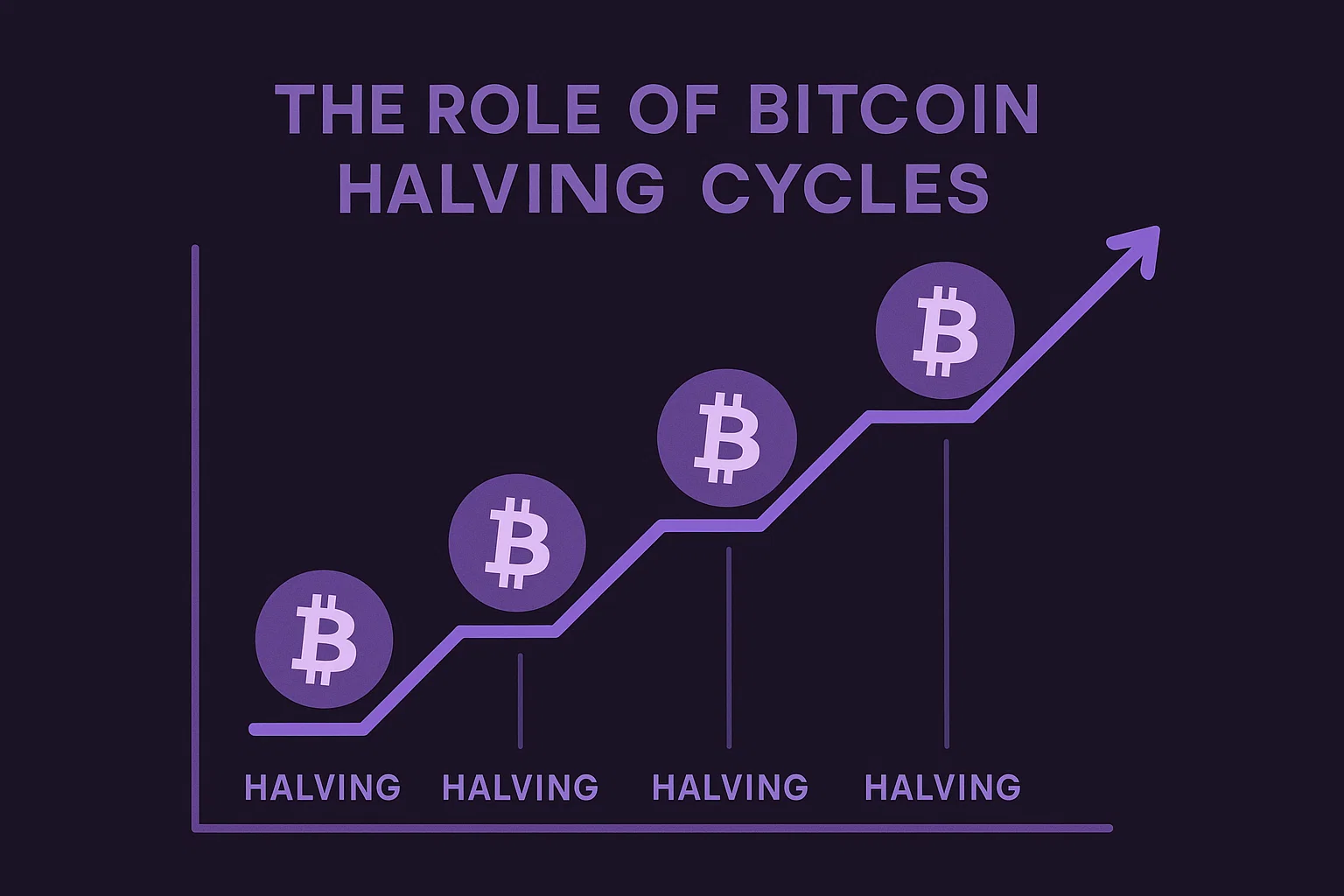
Bitcoin’s programmatic supply schedule creates predictable catalysts that enhance the Bitcoin COVID-style risk-reward setup. Approximately every four years, the Bitcoin protocol reduces mining rewards by half through events called “halvings.” The most recent halving occurred in April 2024, reducing new Bitcoin issuance from 6.25 BTC to 3.125 BTC per block. This supply reduction creates deflationary pressure that historically precedes major price appreciation.
The COVID-era setup occurred roughly one year before the May 2020 halving, creating an extraordinarily favorable environment where demand accelerated while supply growth slowed. Current market conditions similarly position investors ahead of the next halving’s full effects manifesting. Historical patterns suggest that Bitcoin prices typically reach cycle peaks approximately 12-18 months after halvings, as reduced supply gradually affects market dynamics.
Post-Halving Price Performance Patterns
Analyzing post-halving price performance provides context for the current Bitcoin risk-reward setup. Following the 2012 halving, Bitcoin appreciated by over 8,000% during the subsequent cycle. The 2016 halving preceded a 2,000% gain to Bitcoin’s then-all-time high near $20,000. The 2020 halving set the stage for the rally to $69,000, representing roughly a 1,600% increase from COVID crash lows.
While past performance doesn’t guarantee future results, the consistent pattern of substantial post-halving appreciation reflects Bitcoin’s fundamental supply-demand economics. The current setup benefits from both post-halving supply dynamics and the macroeconomic parallels to the COVID era, potentially creating an even more favorable opportunity than previous cycles for investors recognizing these converging factors.
Future Price Projections and Potential Scenarios
Bullish Case for Major Appreciation
The optimistic interpretation of the Bitcoin risk-reward setup envisions Bitcoin reaching new all-time highs significantly above $69,000 within the next 12-24 months. This scenario depends on several factors aligning: continued institutional adoption, favorable regulatory developments, macroeconomic conditions driving safe-haven demand, and Bitcoin’s halving dynamics creating a supply shortage. Under this scenario, Bitcoin could potentially reach $100,000-$150,000 or higher, rewarding early investors with multiples on their capital.
Supporting this bullish case, some analysts point to Bitcoin’s market capitalization relative to other assets. Gold’s market cap exceeds $13 trillion, while Bitcoin currently represents less than $1 trillion. If Bitcoin captures even 10% of gold’s market as a digital alternative, it would require substantial price appreciation from current levels. The COVID-era precedent demonstrated Bitcoin’s capacity for rapid revaluation when fundamental narratives gain mainstream acceptance.
Bearish Risks and Downside Scenarios
Prudent investors must also consider bearish scenarios when evaluating the Bitcoin COVID-style risk-reward opportunity. Economic recession could temporarily suppress risk asset prices, including Bitcoin, as investors prioritize liquidity and capital preservation. Adverse regulatory developments in major markets might limit institutional participation or create market access challenges. Technological vulnerabilities or security breaches—though increasingly unlikely given Bitcoin’s track record—could undermine confidence.
Even under moderately bearish scenarios, Bitcoin’s long-term trajectory likely remains positive due to its fundamental scarcity and growing network effects. However, the path might involve extended consolidation periods or deeper corrections than bulls anticipate. Investors should prepare mentally and financially for various outcomes, ensuring position sizes allow weathering of adverse scenarios while maintaining upside exposure if bullish cases materialize.
Comparing Bitcoin to Traditional Risk-Reward Assets
Bitcoin Versus Stocks and Bonds
Evaluating the Bitcoin risk-reward setup requires comparison against traditional investment alternatives. Stock markets have delivered strong returns over recent years but face headwinds from elevated valuations, geopolitical uncertainty, and potential earnings compression. Bonds offer limited return potential in the current interest rate environment, with inflation-adjusted yields remaining near zero or negative across many developed markets.
Bitcoin’s risk-reward profile differs fundamentally from traditional assets due to its unique characteristics: absolute scarcity, decentralized nature, and role as a monetary alternative. While more volatile than stocks or bonds, Bitcoin’s uncorrelated returns provide diversification benefits that enhance portfolio efficiency. The current setup offers asymmetric upside potential exceeding traditional assets, justifying its inclusion in diversified portfolios despite higher volatility.
Real Estate and Commodities Comparison
Real estate and commodities represent alternative stores of value competing with Bitcoin for investor attention. Real estate offers tangible assets and income generation but requires significant capital, involves illiquidity, and carries geographic concentration risk. Commodities like gold provide inflation hedges but lack Bitcoin’s portability, divisibility, and digital native properties that align with the modern economy.
The Bitcoin risk-reward setup currently offers advantages over these alternatives due to the confluence of favorable factors unique to cryptocurrency markets. While real estate and commodities may perform adequately, they lack the explosive upside potential that Bitcoin demonstrated during its COVID-era recovery. For investors seeking asymmetric opportunities where potential gains substantially exceed downside risks, the current Bitcoin setup presents a compelling proposition.
Practical Steps for Investors
Getting Started with Bitcoin Investment
Investors convinced by the Bitcoin COVID-style risk-reward analysis should follow systematic steps to establish positions. First, secure accounts on reputable cryptocurrency exchanges or brokerage platforms offering Bitcoin exposure. Options include Coinbase, Kraken, and Gemini for direct Bitcoin purchases, or traditional brokers offering Bitcoin ETFs for investors preferring regulated investment vehicles.
Second, implement proper security measures to protect Bitcoin holdings. For small positions, exchange custody may suffice, but larger holdings warrant hardware wallet storage providing complete control over private keys. Understanding basic security principles—strong passwords, two-factor authentication, and avoiding phishing scams—prevents losses to theft or hacking.
Building Conviction Through Education
Successfully capitalizing on the Bitcoin risk-reward setup requires genuine conviction developed through education. Investors should study Bitcoin’s technical foundations, economic principles, and historical development to understand why it represents a genuine monetary innovation rather than mere speculation. Resources, including books like “The Bitcoin Standard,” podcasts featuring cryptocurrency experts, and reputable researcpublicationson, provide comprehensive education.
Understanding Bitcoin’s fundamentals enables investors to maintain positions through inevitable volatility. When prices decline sharply, educated investors recognize whether sell-offs reflect fundamental deterioration or temporary market psychology. This distinction separates successful long-term investors from those who buy high and sell low, missing the extraordinary returns that patient, informed holders capture.
Conclusion
The Bitcoin risk-reward setup currently presenting itself represents a potentially historic opportunity comparable to the exceptional conditions that emerged during the COVID-19 market crash of 2020. While no investment offers guaranteed returns, the confluence of technical indicators, on-chain metrics, macroeconomic conditions, institutional adoption trends, and post-halving dynamics creates an unusually favorable environment for Bitcoin appreciation.
Investors who recognized and acted on the COVID-era setup achieved life-changing returns by purchasing Bitcoin near $4,000 and holding through subsequent volatility. Today’s market presents similar characteristics: widespread fear, technical oversold conditions, strong fundamentals, and pessimistic sentiment, creating asymmetric opportunity. However, windows of optimal risk-reward do not remain open indefinitely—they close as market conditions normalize and prices adjust to reflect underlying value.
Read More: Bitcoin Mining in China Rebounds, Defying 2021 Ban
