

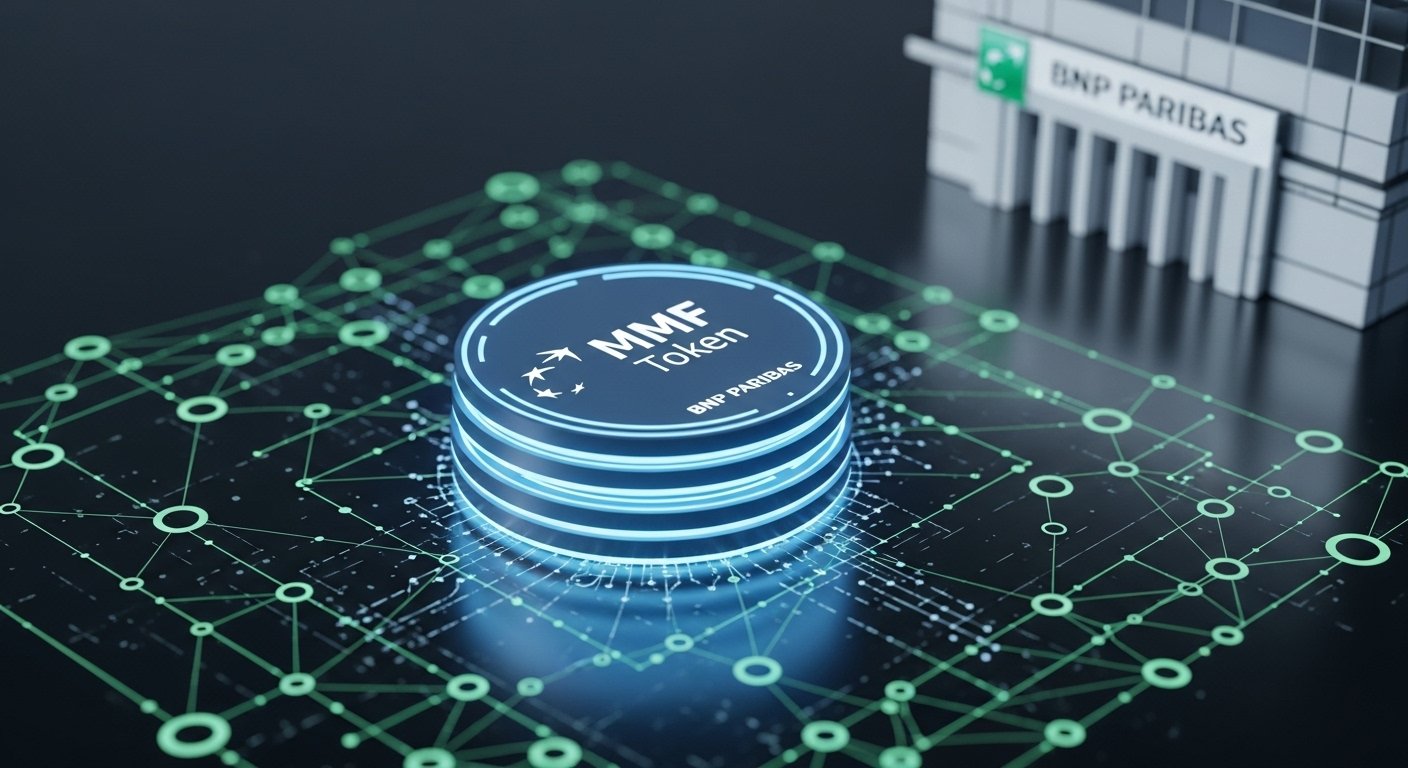
BNP Paribas, one of the world’s leading financial institutions, is exploring the potential of public blockchain infrastructure for tokenising money market funds. This strategic initiative represents a significant step toward bridging traditional finance and decentralized finance ecosystems, leveraging blockchain technology to enhance transparency, efficiency, and liquidity.
Money market funds are essential components of the global financial system, offering investors short-term, low-risk investment opportunities with high liquidity. Despite their importance, these funds often face inefficiencies related to settlement times, operational costs, and cross-border transactions. Tokenisation, powered by public blockchain networks, has the potential to address these challenges by transforming fund shares into digital assets that can be traded seamlessly on a distributed ledger.
This article explores the rationale behind BNP Paribas’s blockchain initiative, the benefits of money market fund tokenisation, the role of public blockchain infrastructure, regulatory and technological considerations, and the broader implications for digital finance.
Understanding Money Market Fund Tokenisation
Money market fund tokenisation involves converting traditional fund shares into digital tokens that can be recorded, transferred, and settled on a blockchain. This approach combines the stability and regulatory oversight of conventional funds with the efficiency, transparency, and programmability of digital assets.
By tokenising money market funds, BNP Paribas aims to streamline operational processes such as subscription, redemption, and secondary trading. Tokenisation allows shares to be digitally represented on a blockchain, enabling automated settlement, reduced counterparty risk, and faster transaction times.
The use of smart contracts plays a crucial role in this process. Smart contracts automate administrative tasks, enforce compliance rules, and facilitate accurate, instantaneous transactions. This reduces manual intervention and operational inefficiencies, making fund management more effective.
Tokenisation also opens the door to fractional ownership. Investors can acquire portions of fund shares in smaller increments, increasing accessibility and attracting a broader range of participants. Additionally, blockchain-based recordkeeping enhances auditability, providing regulators and investors with transparent, immutable transaction histories.
Why BNP Paribas Is Turning to Public Blockchain Infrastructure
BNP Paribas’s decision to explore public blockchain infrastructure reflects the growing interest in leveraging decentralized networks for regulated financial products. Public blockchains, unlike private or permissioned networks, offer decentralized consensus, immutability, and open access, which can enhance trust and operational efficiency.
Public blockchain infrastructure enables multiple participants, including investors, custodians, and regulators, to access a single, verifiable source of truth. This reduces reconciliation costs, minimizes errors, and accelerates settlement cycles.
Transparency is another key advantage. Since public blockchains are open, all transactions are traceable and verifiable, supporting regulatory compliance and investor confidence. For BNP Paribas, adopting public blockchain networks aligns with efforts to innovate within the bounds of existing financial regulations while exploring the benefits of decentralized technologies.
The bank’s initiative also reflects broader industry trends. As digital assets and decentralized finance gain traction, financial institutions are increasingly exploring how public blockchains can support regulated products. Tokenising money market funds on a public ledger positions BNP Paribas as a pioneer in integrating traditional finance with emerging digital infrastructure.
Benefits of Money Market Fund Tokenisation
Tokenising money market funds offers numerous benefits for investors, financial institutions, and market infrastructure.
One major benefit is operational efficiency. Traditional fund transactions often require multiple intermediaries, manual reconciliations, and delayed settlement times. Tokenisation simplifies these processes, enabling near-instantaneous settlement and reducing administrative costs.
Liquidity enhancement is another advantage. Digital tokens can be traded on secondary markets more easily than traditional fund shares. Fractional ownership and programmable trading rules allow investors to enter and exit positions quickly, improving market liquidity and flexibility.
Transparency and auditability are also improved. Each transaction recorded on a blockchain is immutable and publicly verifiable, providing a clear audit trail. Regulators and fund managers can access real-time reporting, strengthening oversight and compliance.
Furthermore, tokenisation can reduce counterparty and operational risks. Smart contracts automate compliance checks, settlement, and dividend distribution, lowering the likelihood of human error or fraudulent activity. This increases investor confidence and strengthens the credibility of money market funds.
Finally, tokenisation supports global accessibility. Investors across borders can participate in tokenised funds without traditional banking limitations, expanding the investor base and potentially increasing fund inflows.
Technological Considerations for Public Blockchain Implementation

Implementing public blockchain infrastructure for money market fund tokenisation involves several technological considerations.
Scalability is a critical factor. Public blockchains must handle high transaction volumes efficiently to support fund subscriptions, redemptions, and secondary trading. High throughput networks and layer-two solutions may be required to ensure smooth operations.
Security is another essential aspect. Public blockchains must resist hacking attempts, maintain private key integrity, and protect sensitive financial information. Advanced cryptographic methods, secure wallet integrations, and multi-signature solutions are integral to safeguarding investor assets.
Interoperability is also important. Tokenised fund shares must be compatible with existing financial systems, including custodians, settlement platforms, and regulatory reporting tools. Bridging traditional finance infrastructure with blockchain networks requires robust integration protocols and standardized APIs.
Moreover, smart contract design is critical. Contracts must enforce compliance rules, automate settlements, and enable flexible token functionalities. Rigorous testing, auditing, and continuous monitoring ensure that smart contracts operate as intended without vulnerabilities.
Finally, user experience must be considered. For institutional and retail investors alike, interaction with tokenised funds should be intuitive, seamless, and supported by educational resources to foster adoption.
Regulatory and Compliance Implications
Tokenising money market funds on public blockchains introduces unique regulatory challenges. BNP Paribas must navigate a complex landscape of securities law, anti-money laundering regulations, and investor protection requirements.
Regulators require that tokenised fund shares comply with existing fund rules, including limitations on who can invest, how assets are valued, and how dividends are distributed. Smart contracts must incorporate these rules to ensure automated compliance.
Anti-money laundering and know-your-customer regulations are essential. Investor identities must be verified, and transactions must be monitored for suspicious activity. Blockchain-based systems must integrate these compliance checks without undermining decentralization or efficiency.
Cross-border regulatory considerations are also significant. Public blockchain networks operate globally, raising questions about jurisdiction, reporting requirements, and coordination between different regulators. Collaborative frameworks and clear guidance will be essential for widespread adoption.
Despite these challenges, regulators are increasingly open to exploring blockchain solutions for fund management. Transparent, auditable, and compliant tokenised funds can enhance oversight and reduce systemic risk.
Potential Market Impacts of Tokenised Money Market Funds
The introduction of tokenised money market funds could reshape the financial landscape in several ways.
Efficiency gains could reduce operational costs for fund managers, potentially increasing returns for investors. Faster settlement times may also enable more dynamic portfolio management and improved cash flow.
Liquidity improvements could attract new investors. Digital tokens can be traded on multiple platforms, increasing accessibility and market depth. Fractional ownership expands participation, allowing smaller investors to access traditionally large institutional funds.
Market transparency is enhanced. Blockchain-based reporting provides regulators, auditors, and investors with real-time visibility into fund holdings, transaction flows, and compliance status. This reduces the risk of mismanagement and improves confidence in the financial system.
Innovation in financial products is another potential outcome. Tokenised funds could be integrated with decentralized finance platforms, enabling programmable yield strategies, automated lending, or cross-asset investments. BNP Paribas’s initiative may catalyse further exploration of hybrid financial products combining traditional and digital assets.
Challenges and Risks to Consider
Despite its potential, tokenising money market funds on public blockchains involves risks. Market volatility, regulatory uncertainty, and technological vulnerabilities can affect adoption and performance.
Investor education is crucial. Many participants may be unfamiliar with blockchain mechanics, digital wallets, or token management. Misunderstandings could reduce trust and slow adoption.
Cybersecurity risks remain a concern. Although blockchain is inherently secure, vulnerabilities in wallets, exchanges, or smart contracts could result in financial losses. Continuous monitoring and robust security measures are essential.
Regulatory changes could also impact the feasibility of tokenised funds. Evolving legal frameworks may introduce compliance requirements, transaction limitations, or reporting obligations that affect operational efficiency.
Finally, network scalability and performance must be maintained. Public blockchains that cannot handle high transaction volumes could experience delays, affecting investor experience and market confidence.
Strategic Implications for BNP Paribas and the Financial Sector

BNP Paribas’s exploration of public blockchain infrastructure positions the bank as a leader in digital finance innovation. By experimenting with tokenisation of money market funds, the institution gains insights into operational efficiency, regulatory integration, and market potential.
The initiative may inspire other financial institutions to explore similar blockchain applications. Tokenised fund products could become a standard in wealth management, investment banking, and institutional asset allocation.
Collaboration with technology providers, fintech startups, and regulatory bodies will be essential. Developing interoperable, secure, and compliant blockchain solutions requires expertise from multiple domains. BNP Paribas’s initiative demonstrates the potential for partnerships that accelerate innovation while mitigating risks.
The Future of Tokenised Money Market Funds
The future of money market fund tokenisation appears promising. As blockchain technology matures, public networks become more scalable, and regulatory clarity improves, tokenised funds may gain widespread adoption.
Integration with decentralized finance ecosystems, cross-border transactions, and programmable investment products could redefine traditional fund management. Investors may enjoy increased liquidity, transparency, and efficiency, while financial institutions benefit from streamlined operations and lower costs.
BNP Paribas’s initiative represents an important step in this evolution. By exploring the potential of public blockchain infrastructure, the bank is helping shape the future of digital finance and demonstrating how traditional financial products can coexist with emerging technologies.
Conclusion
BNP Paribas’s exploration of public blockchain infrastructure for money market fund tokenisation highlights the transformative potential of combining traditional finance with decentralized technologies. Tokenisation offers benefits including enhanced operational efficiency, improved liquidity, greater transparency, and expanded market accessibility.
While technological, regulatory, and educational challenges remain, the initiative demonstrates that blockchain-based solutions can complement established financial systems. By leveraging public blockchains, financial institutions like BNP Paribas can create innovative, secure, and efficient investment products that meet the needs of modern investors.
As the financial sector continues to embrace digital innovation, tokenised money market funds may become a central component of investment strategies, bridging the gap between conventional finance and the evolving digital economy.
FAQs
Q: What is money market fund tokenisation, and how does it work?
Money market fund tokenisation involves converting traditional fund shares into digital tokens recorded on a blockchain. These tokens represent fractional ownership and enable automated settlement, transparent recordkeeping, and faster transaction processing, while retaining compliance with existing fund regulations.
Q: Why is BNP Paribas exploring public blockchain infrastructure for this initiative?
BNP Paribas is exploring public blockchain infrastructure because it provides decentralized consensus, transparency, immutability, and open access. Public blockchains enhance trust, reduce reconciliation costs, and allow multiple participants, including regulators, to verify transactions in real time.
Q: What are the main benefits of tokenised money market funds for investors?
Tokenised money market funds offer faster settlement, improved liquidity, lower operational costs, fractional ownership, and enhanced transparency. Investors can access real-time fund information, trade shares efficiently, and enjoy a secure, automated investment process.
Q: What regulatory considerations must be addressed when tokenising money market funds?
Regulatory considerations include ensuring compliance with securities law, anti-money laundering rules, know-your-customer requirements, investor protection standards, and cross-border reporting obligations. Smart contracts must enforce these rules automatically to maintain compliance.
Q: What challenges could hinder the adoption of tokenised money market funds?
Challenges include cybersecurity risks, investor unfamiliarity with blockchain technology, network scalability limitations, evolving regulatory frameworks, and the need for seamless integration with existing financial infrastructure. Addressing these risks is critical for widespread adoption.
