

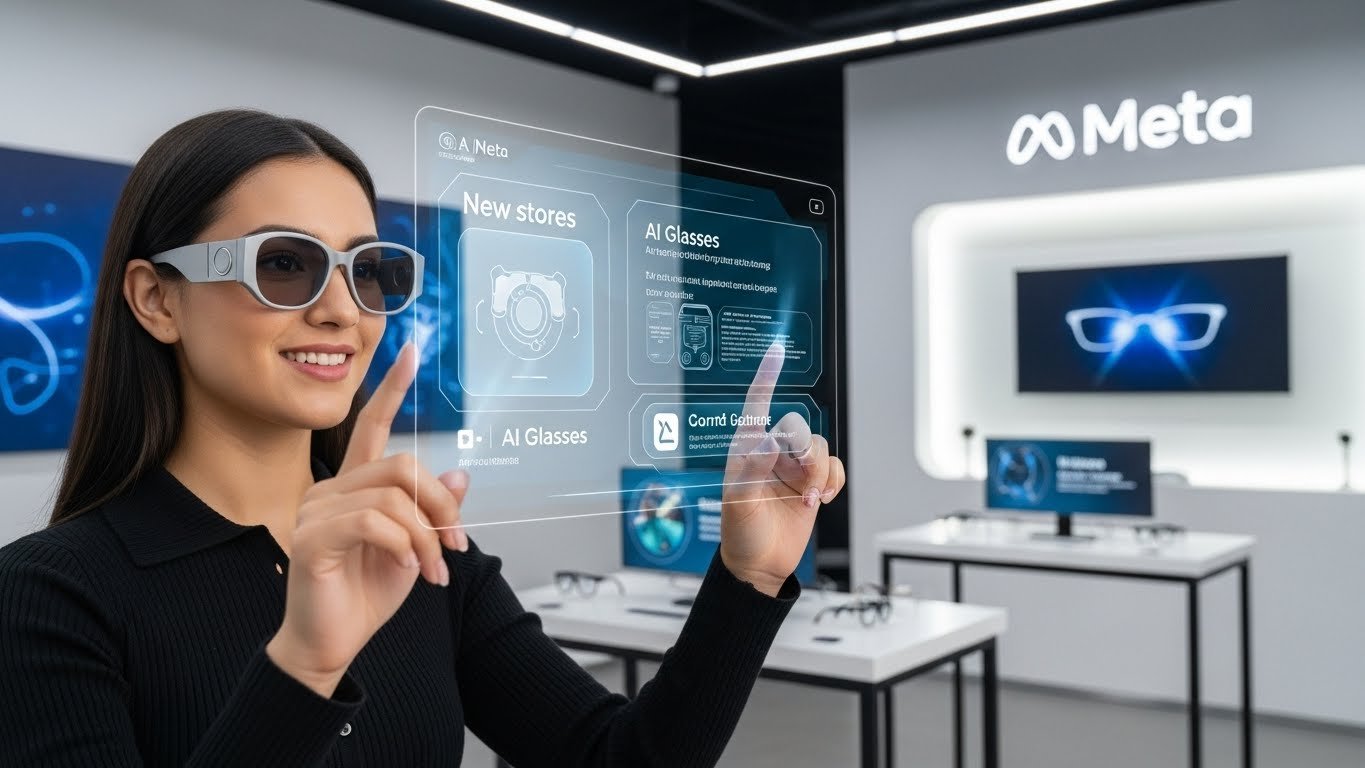
For more than a decade, Meta has been synonymous with social media. Platforms like Facebook, Instagram, and WhatsApp defined how billions of people communicate, consume content, and build digital identities. However, as user behavior evolves and competition intensifies, Meta is undergoing one of the most significant strategic transformations in its history. The company is no longer positioning itself solely as a social networking giant. Instead, it is actively reshaping its identity around immersive technology, artificial intelligence, and real-world consumer experiences.
The latest phase of this transformation is marked by Meta’s push into AI-powered glasses and the expansion of physical retail stores. These moves signal a deliberate shift beyond screens and feeds, toward a future where digital interaction blends seamlessly with the physical world. Meta’s vision centers on making AI more personal, contextual, and accessible through wearable devices while using physical stores to educate consumers and showcase next-generation products.
This article explores how Meta’s expansion beyond social media with AI glasses and new stores reflects a broader strategic pivot, what it means for the technology industry, and how it could redefine the way people interact with digital ecosystems in the years ahead.
The strategic shift behind Meta’s evolution
From social platforms to technology ecosystem
Meta’s transformation did not happen overnight. Slowing growth in traditional social media engagement, increasing regulatory pressure, and changes in user preferences have pushed the company to rethink its long-term strategy. Rather than relying solely on advertising-driven social platforms, Meta aims to build a diversified technology ecosystem that spans hardware, software, and immersive experiences. This shift positions Meta as a company focused on artificial intelligence, augmented reality, virtual reality, and spatial computing. By expanding into these areas, Meta seeks to reduce its dependence on social media revenue while opening new growth opportunities.
Why diversification is critical for Meta’s future
The global technology landscape has become more competitive, with users demanding innovation beyond incremental feature updates. Diversification allows Meta to explore new markets and redefine its relationship with consumers. AI glasses and physical retail stores represent tangible expressions of this strategy, moving Meta closer to end users and integrating technology into everyday life rather than confining it to mobile apps.
AI glasses as the cornerstone of Meta’s next chapter
Redefining wearable technology with AI integration
Meta’s AI glasses are designed to go beyond traditional smart eyewear. Instead of functioning as simple accessories, these devices aim to become intelligent companions that enhance daily activities through real-time assistance, contextual awareness, and hands-free interaction. By embedding advanced AI models into wearable hardware, Meta seeks to deliver experiences that feel natural and intuitive. This includes voice-based interaction, environmental awareness, and personalized responses based on user behavior.
Making AI personal and always available
One of the key goals behind Meta’s AI glasses is to make AI more personal. Unlike smartphones, which require active engagement, AI glasses are designed to be present without being intrusive. This always-available intelligence could change how people access information, communicate, and navigate their surroundings. Meta’s vision emphasizes ambient computing, where technology works in the background to support human activity.
The role of augmented reality in Meta’s vision
Blending digital content with the physical world
Augmented reality is central to Meta’s long-term ambitions. AI glasses act as a gateway to overlay digital information onto the physical environment, enabling users to interact with both simultaneously. This capability opens new possibilities for navigation, education, commerce, and entertainment. Meta envisions a future where digital content enhances real-world experiences rather than replacing them.
Practical use cases driving adoption
For AI glasses to succeed, they must offer clear practical benefits. Meta is focusing on everyday use cases such as real-time translation, navigation assistance, content capture, and AI-powered recommendations. By prioritizing utility over novelty, Meta aims to accelerate mainstream adoption and position AI glasses as essential tools rather than niche gadgets.
Physical stores as a bridge between technology and consumers
Why Meta is investing in brick-and-mortar experiences
In an increasingly digital world, Meta’s move toward physical stores may seem counterintuitive. However, these retail spaces play a critical role in educating consumers about emerging technologies. AI glasses, virtual reality headsets, and immersive devices are difficult to understand through online descriptions alone. Physical stores allow users to experience products firsthand, ask questions, and build trust.
Creating immersive retail environments
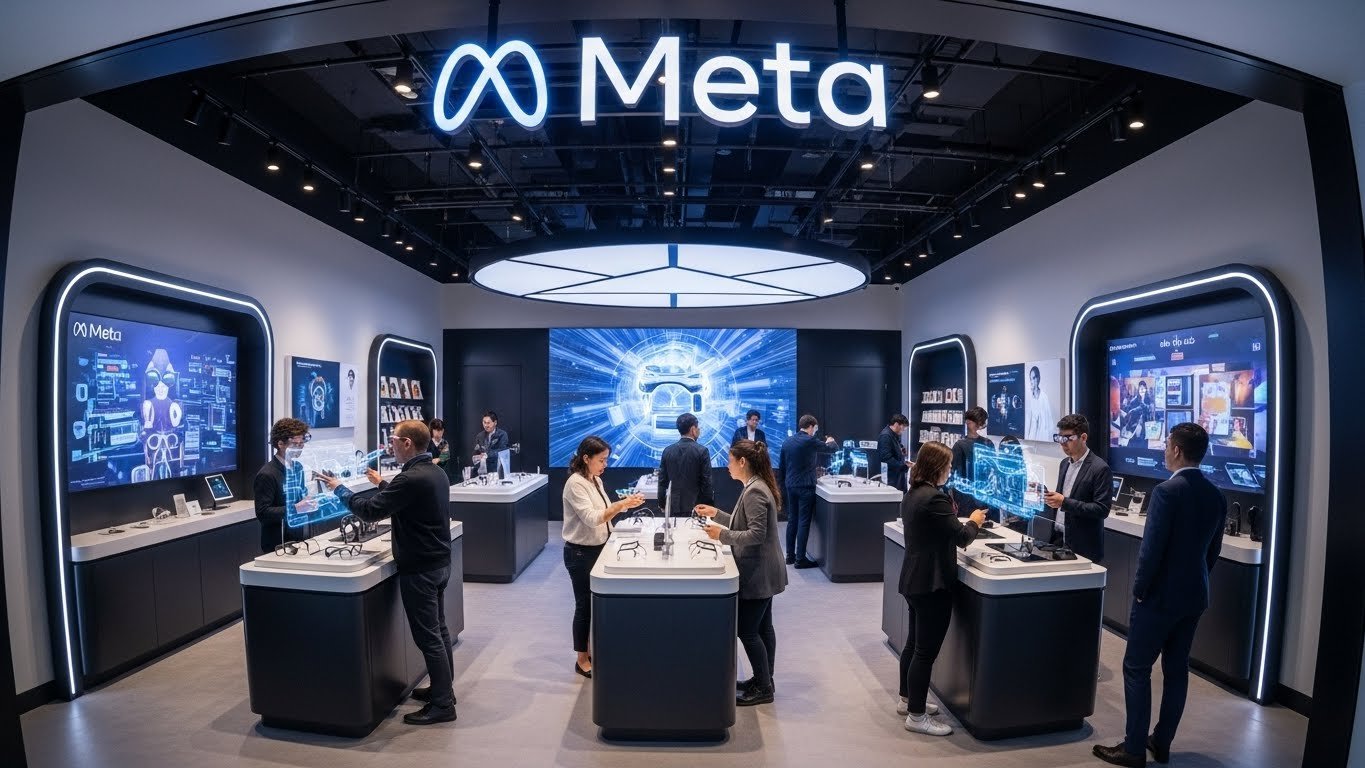
Meta’s stores are designed to be experiential rather than transactional. Visitors can interact with devices, explore use cases, and understand how AI and immersive technologies fit into daily life. This approach aligns with Meta’s broader goal of demystifying complex technologies and making them accessible to a wider audience.
Retail strategy and brand perception
Strengthening consumer trust and transparency
Physical stores give Meta an opportunity to engage directly with consumers, addressing concerns around privacy, data usage, and AI ethics. Face-to-face interaction can humanize the brand and foster transparency. This is particularly important as Meta introduces more advanced AI-driven products that raise questions about surveillance, data collection, and user autonomy.
Positioning Meta as a consumer technology leader
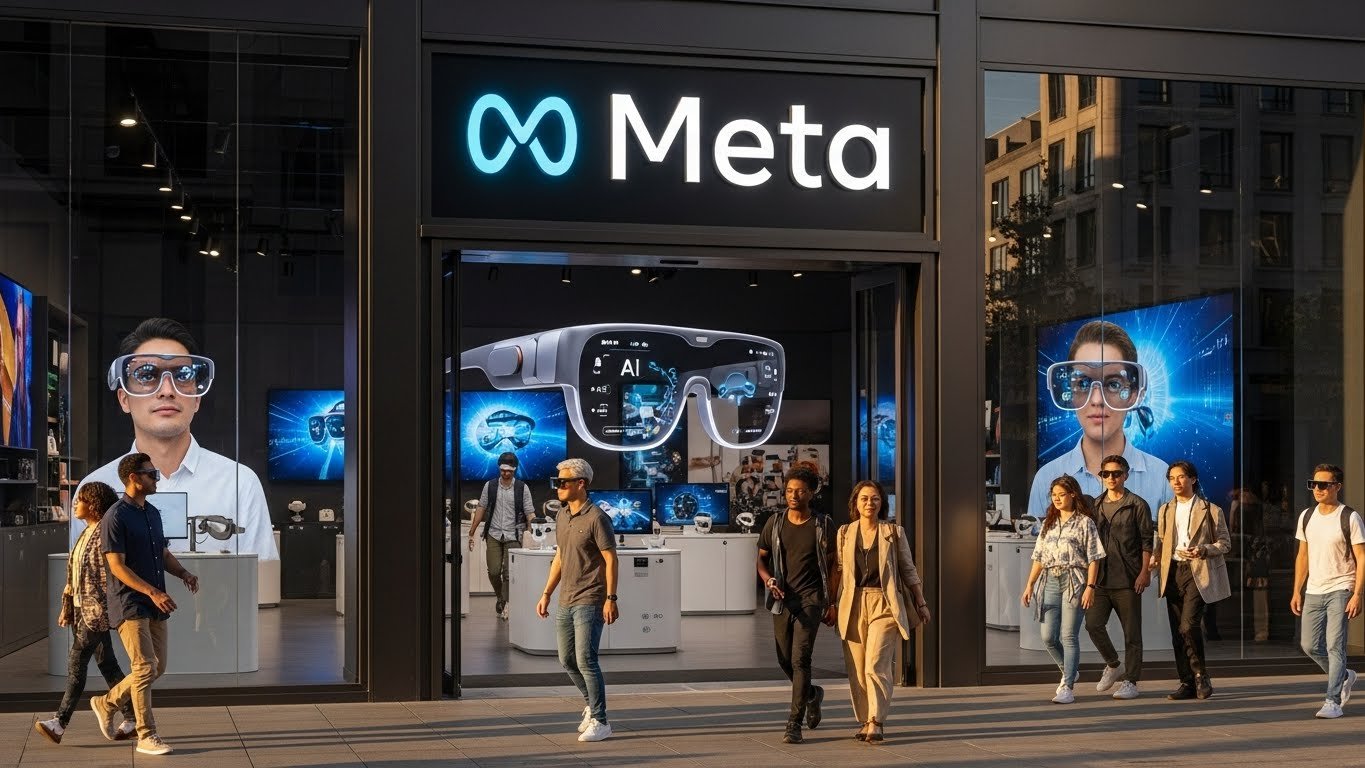
By operating its own retail spaces, Meta positions itself alongside other major consumer technology brands. This shift reinforces its identity as a hardware and innovation company, not just a social media platform.vThe presence of physical stores signals long-term commitment to immersive technology and consumer engagement.
AI as the unifying force across Meta’s ecosystem
Integrating AI across hardware and software
AI is the connective tissue linking Meta’s products and services. From content recommendations on social platforms to intelligent assistance in AI glasses, machine learning plays a central role.
This integration allows Meta to deliver consistent experiences across devices, creating a cohesive ecosystem where AI adapts to user preferences and context.
Ethical considerations and responsible AI development
As AI becomes more embedded in daily life, ethical considerations become increasingly important. Meta has emphasized responsible AI development, focusing on transparency, user control, and fairness. Building trust is essential for widespread adoption, especially for wearable devices that operate in close proximity to users.
The competitive landscape of AI wearables
How Meta differentiates itself
The market for AI wearables is becoming more competitive, with multiple technology companies exploring similar concepts. Meta’s advantage lies in its scale, AI research capabilities, and existing user base. By combining hardware innovation with software expertise, Meta aims to deliver integrated solutions rather than standalone devices.
Challenges in standing out
Despite its strengths, Meta faces challenges in convincing consumers to adopt new form factors. Comfort, battery life, design, and privacy concerns all influence user acceptance. The success of AI glasses will depend on Meta’s ability to balance functionality with aesthetics and user trust.
Impact on social media and digital interaction
Social platforms as part of a larger ecosystem
Meta’s social media platforms are no longer standalone products. They are evolving into components of a broader ecosystem that includes hardware and immersive experiences. AI glasses could change how users capture and share content, making social interaction more spontaneous and contextual.
Shifting user behavior and content creation
Wearable technology may redefine content creation by enabling hands-free capture and real-time sharing. This shift could lead to more authentic and immersive social experiences. Meta’s challenge is to integrate these new behaviors without overwhelming users or compromising privacy.
Economic and industry implications
New revenue streams beyond advertising
AI glasses and physical stores open new revenue streams for Meta, reducing reliance on advertising. Hardware sales, software subscriptions, and premium services could become significant contributors.
This diversification strengthens Meta’s financial resilience and long-term growth prospects.
Influence on the broader tech industry
Meta’s moves could influence how other technology companies approach AI, wearables, and retail. As a major industry player, Meta’s success or failure will shape market expectations and investment trends. The company’s willingness to invest heavily in emerging technologies signals confidence in a future beyond traditional screens.
Challenges and risks ahead
Consumer adoption and market readiness
Convincing consumers to embrace AI glasses requires overcoming skepticism and demonstrating clear value. Early adoption may be slow, requiring sustained investment and iteration. Meta must also navigate cultural differences and regional preferences as it expands globally.
Regulatory and privacy concerns
Wearable AI devices raise complex regulatory questions, particularly around data collection and surveillance. Meta’s history with privacy scrutiny adds to the challenge. Proactive engagement with regulators and transparent policies will be essential for long-term success.
The long-term vision for Meta
Building the foundation for immersive computing
Meta’s expansion beyond social media reflects a long-term vision centered on immersive computing. AI glasses and physical stores are stepping stones toward a future where digital and physical realities converge. This vision aligns with broader trends in augmented reality, spatial computing, and human-centered AI.
Redefining how people interact with technology
Ultimately, Meta aims to redefine the relationship between humans and technology. By moving beyond screens and creating more natural interfaces, the company seeks to make technology an unobtrusive part of daily life. Whether this vision succeeds will depend on execution, trust, and the ability to deliver meaningful value.
Conclusion
Meta’s move beyond social media with AI glasses and new stores represents one of the most ambitious pivots in the company’s history. By investing in wearable AI, immersive retail experiences, and a diversified technology ecosystem, Meta is signaling its intent to shape the future of digital interaction rather than simply respond to market changes.
These initiatives reflect a belief that the next era of technology will be defined by personalization, immersion, and seamless integration into everyday life. While challenges remain, Meta’s strategy underscores a clear message: the company is no longer just a social media giant, but a contender in the race to define how humans experience technology in the AI-driven world.
FAQs
Q: Why is Meta moving beyond social media into AI glasses and physical stores?
Meta is diversifying its business to reduce reliance on social media advertising and to position itself as a leader in AI, wearable technology, and immersive digital experiences.
Q: How do AI glasses fit into Meta’s long-term strategy?
AI glasses serve as a gateway to augmented reality and ambient computing, allowing Meta to integrate artificial intelligence into everyday life through hands-free, contextual interaction.
Q: What is the purpose of Meta opening physical retail stores?
Physical stores allow consumers to experience complex technologies firsthand, build trust, and better understand how Meta’s AI and immersive products work in real-world settings.
Q: How might AI glasses change social media usage?
AI glasses could make content creation more spontaneous and immersive, enabling hands-free capture and real-time sharing while integrating social interaction into daily activities.
Q: What challenges could Meta face with AI glasses adoption?
Key challenges include consumer skepticism, privacy concerns, regulatory scrutiny, design limitations, and the need to demonstrate clear, everyday value to users.
