

Ethereum’s Fusaka Upgrade is set to launch in December 2025. This significant network enhancement represents a critical milestone in Ethereum’s ongoing evolution toward greater efficiency, scalability, and user accessibility. The Ethereum Fusaka Upgrade promises to bring substantial improvements that could reshape how developers and users interact with the world’s leading smart contract platform. As we approach this pivotal moment, understanding what this upgrade entails and how it will impact the Ethereum ecosystem becomes essential for investors, developers, and blockchain enthusiasts alike. This comprehensive guide explores everything you need to know about the upcoming transformation.
Ethereum Fusaka Upgrade
The Ethereum Fusaka Upgrade represents a carefully orchestrated hard fork designed to enhance the network’s fundamental capabilities. Unlike previous upgrades that focused primarily on transitioning from proof-of-work to proof-of-stake, this upgrade concentrates on optimizing the existing infrastructure to deliver tangible benefits to everyday users and enterprise applications.
What Makes Fusaka Different from Previous Upgrades
While Ethereum has experienced numerous upgrades throughout its history, including the groundbreaking Merge and subsequent Shanghai upgrade, the Ethereum Fusaka Upgrade distinguishes itself through its comprehensive approach to network optimization. This upgrade doesn’t aim to fundamentally restructure Ethereum’s consensus mechanism but rather refines and enhances the systems already in place.
The development team has spent over eighteen months researching, testing, and implementing the changes that comprise this upgrade. This extended preparation period reflects the complexity of the improvements and the Ethereum Foundation’s commitment to ensuring network stability and security remain uncompromised throughout the transition.
Key Features of the Ethereum Fusaka Upgrade
Enhanced Transaction Processing Speed
One of the most anticipated aspects of the Ethereum Fusaka Upgrade involves significant improvements to transaction processing capabilities. The upgrade introduces optimized execution layer protocols that enable validators to process transactions more efficiently, potentially reducing confirmation times by up to 30% compared to current network performance.
These speed enhancements stem from refined block propagation mechanisms and improved validator communication protocols. By streamlining how nodes share information across the network, Ethereum can achieve faster consensus on transaction validity without compromising security or decentralization principles.
Gas Fee Optimization Mechanisms
The Ethereum network upgrade incorporates sophisticated gas fee calculation algorithms designed to provide more predictable and potentially lower transaction costs. While Ethereum’s EIP-1559 mechanism introduced base fee burning and improved fee predictability, the Fusaka upgrade takes this further with dynamic pricing adjustments that respond more accurately to actual network demand.
Users can expect more stable gas prices during periods of moderate network activity, with the system better equipped to handle sudden spikes in demand without the dramatic fee increases that have historically plagued the network during high-traffic events.
Validator Efficiency Improvements
Validators form the backbone of Ethereum’s proof-of-stake consensus mechanism, and the Ethereum Fusaka Upgrade introduces several enhancements specifically targeting validator operations. These improvements include:
Optimized Attestation Aggregation: Validators can now combine multiple attestations more efficiently, reducing the computational overhead required to participate in consensus while maintaining security guarantees.
Enhanced Penalty Mechanisms: The upgrade refines slashing conditions to better distinguish between malicious behavior and honest operational errors, protecting well-intentioned validators while maintaining network security.
Improved Reward Distribution: More granular reward calculations ensure validators receive compensation that accurately reflects their contribution to network security and performance.
Technical Architecture Behind the Fusaka Upgrade
Execution Layer Enhancements
The execution layer, responsible for processing transactions and executing smart contracts, receives substantial attention in this ETH upgrade in December 2025. Engineers have implemented state trie optimizations that reduce the computational resources required to access and update account balances, contract storage, and other blockchain state information.
These architectural improvements enable nodes to maintain synchronization with the network more efficiently, potentially lowering the hardware requirements for running full nodes and contributing to greater network decentralization.
Consensus Layer Modifications
While the consensus layer already functions effectively following previous upgrades, the Ethereum Fusaka Upgrade introduces refinements that enhance validator coordination and block finality assurances. These modifications work in harmony with execution layer improvements to create a more cohesive and efficient overall system.
The upgrade implements advanced cryptographic techniques that allow validators to achieve consensus with fewer communication rounds, effectively reducing network latency and improving the user experience for time-sensitive applications like decentralized exchanges and gaming platforms.
Impact on Ethereum Staking
Changes for Individual Stakers
The Ethereum Fusaka Upgrade brings important considerations for individuals who stake ETH to support network security. While the fundamental 32 ETH requirement for running a validator remains unchanged, the upgrade introduces flexibility in how stakers can manage their positions.
New withdrawal mechanisms allow for more granular control over staked assets, enabling validators to adjust their stake amounts without requiring complete validator exits and re-entries. This flexibility makes Ethereum staking more accessible and manageable for individual participants.
Implications for Staking Pools and Services
Liquid staking protocols and centralized staking services will need to update their infrastructure to accommodate the changes introduced by this Ethereum network upgrade. Most major staking providers have already begun implementing necessary updates to ensure seamless service continuity through the transition period.
Users of staking services should verify that their chosen platforms have prepared adequately for the upgrade and understand any temporary service interruptions that might occur during the implementation phase.
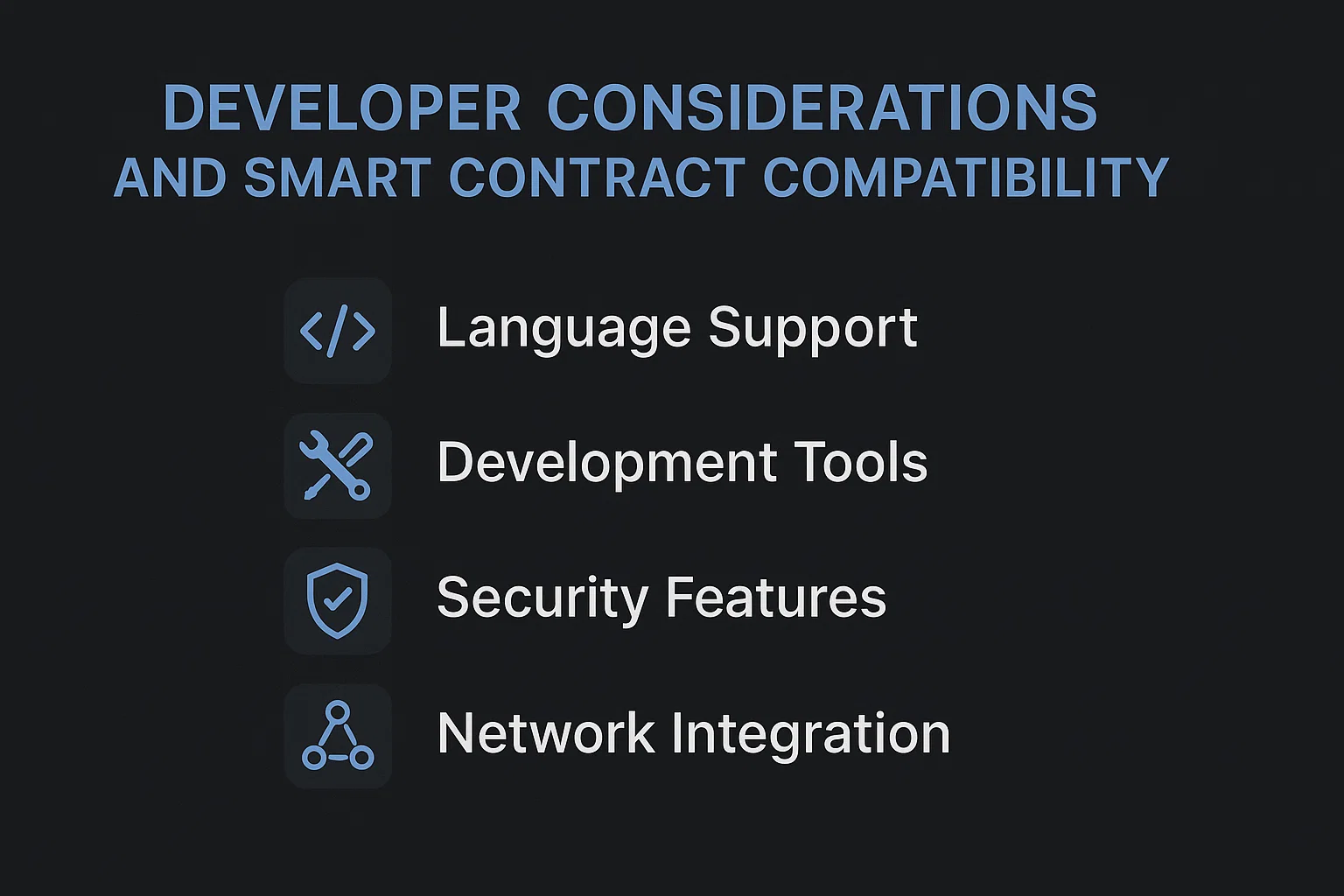
Developer Considerations and Smart Contract Compatibility
Backward Compatibility Assurances
One of the primary concerns whenever blockchain networks undergo significant upgrades involves the compatibility of existing smart contracts and decentralized applications. The Ethereum development community has designed the Ethereum Fusaka Upgrade with extensive backward compatibility in mind.
Existing smart contracts will continue functioning without requiring modifications in the vast majority of cases. The upgrade implements changes at the protocol level that remain transparent to most application-layer code, ensuring that the extensive ecosystem of DeFi protocols, NFT marketplaces, and other dApps can continue operating seamlessly.
New Development Opportunities
While maintaining compatibility with existing applications, the Ethereum Fusaka Upgrade also introduces new capabilities that forward-thinking developers can leverage to create more sophisticated and efficient decentralized applications.
Enhanced precompiled contracts provide developers with access to complex cryptographic operations at significantly reduced gas costs, enabling use cases that were previously economically infeasible. These improvements particularly benefit applications requiring intensive cryptographic verification, such as zero-knowledge proof systems and advanced privacy protocols.
Economic Implications of the Fusaka Upgrade
Effect on ETH Token Economics
The Ethereum Fusaka Upgrade influences Ethereum’s tokenomics through several mechanisms. Improved network efficiency and reduced gas fees could drive increased transaction volume, potentially accelerating ETH’s deflationary dynamics established by the base fee burning mechanism.
Analysts project that if the upgrade achieves its efficiency targets, the network could see transaction volume increases of 40-60% over the subsequent twelve months, with corresponding impacts on ETH supply dynamics and market value.
Market Sentiment and Price Predictions
Historically, successful Ethereum upgrades have correlated with positive market sentiment and price appreciation. While past performance doesn’t guarantee future results, the ETH upgrade in December 2025 arrives at a potentially opportune moment in the broader cryptocurrency market cycle.
Market analysts have offered varied predictions regarding the upgrade’s price impact, with estimates ranging from a modest 15-20% appreciation to more optimistic projections exceeding 50% gains over the six months following implementation. These predictions depend heavily on successful deployment without significant technical issues and favorable broader market conditions.
Comparing Fusaka to Other Blockchain Upgrades
Ethereum’s Upgrade Philosophy
The Ethereum Fusaka Upgrade reflects Ethereum’s characteristic approach to protocol development: methodical, research-driven, and prioritizing security over rapid implementation. This philosophy contrasts with some competing platforms that implement frequent updates with shorter development cycles.
While this conservative approach occasionally frustrates users eager for immediate improvements, it has contributed to Ethereum’s reputation for reliability and security, factors that prove crucial for the billions of dollars in value secured by the network.
Lessons from Previous Ethereum Upgrades
The Ethereum community has learned valuable lessons from previous network upgrades, particularly the Merge and Shanghai upgrades. These experiences have informed the planning and execution strategy for the Ethereum Fusaka Upgrade, resulting in more comprehensive testing protocols and better communication with ecosystem participants.
The development team has conducted multiple public testnet deployments, allowing developers, validators, and infrastructure providers to identify and address potential issues well before the mainnet implementation.
Security Considerations and Risk Management
Audit Processes and Safety Measures
Security remains paramount for any blockchain upgrade, and the Ethereum Fusaka Upgrade has undergone extensive security auditing by multiple independent firms specializing in blockchain protocol analysis. These audits have identified and addressed numerous potential vulnerabilities before they could affect the live network.
The Ethereum Foundation has also established a substantial bug bounty program specifically targeting the Fusaka upgrade code, incentivizing security researchers to discover and report any remaining issues before the December launch date.
Contingency Plans and Rollback Procedures
Despite exhaustive testing and preparation, the development team has established comprehensive contingency plans to address any unexpected issues that might arise during or after the Ethereum network upgrade implementation. These plans include the ability to pause certain features or, in extreme circumstances, implement emergency patches to address critical vulnerabilities.
The community has agreed upon clear criteria for evaluating upgrade success and defined circumstances under which more drastic measures might become necessary, ensuring transparent and coordinated responses to potential problems.
Timeline and Implementation Schedule
Pre-Upgrade Preparation Phase
As of November 2025, the Ethereum ecosystem is in the final preparation phase before the Ethereum Fusaka Upgrade deployment. Node operators have been strongly encouraged to update their software to the latest client versions that support the upgrade.
Major exchanges, wallet providers, and DeFi protocols have published their readiness status and planned maintenance windows to ensure users can plan accordingly. Most major platforms expect minimal service disruption, though they recommend users avoid conducting critical transactions during the actual upgrade window.
Expected Deployment Date and Process
The Ethereum Fusaka Upgrade is scheduled for December 12, 2025, pending final confirmation from the Ethereum core developers. The upgrade will activate at a predetermined block number, ensuring all nodes transition simultaneously when that block is reached.
The actual transition process is expected to take approximately 30-45 minutes from the activation block, during which time the network will continue processing transactions while implementing the new protocol rules. Users should experience minimal disruption, though confirmation times might temporarily increase during the transition period.
Post-Upgrade Monitoring Period
Following the successful activation of the Ethereum Fusaka Upgrade, the development community will maintain heightened monitoring of network performance for at least two weeks. This intensive oversight period allows for rapid detection and response to any unexpected behaviors or edge cases that might not have appeared during testnet deployments.
Community members and validators are encouraged to report any anomalies through established communication channels, ensuring the development team can quickly assess and address any concerns.
Community Reactions and Expert Opinions
Developer Community Perspectives
The developer community has generally expressed strong support for the Ethereum Fusaka Upgrade, with many noting that the improvements address long-standing pain points in building and deploying decentralized applications. The enhanced gas efficiency and processing speed improvements are particularly popular among developers building consumer-facing applications where user experience is paramount.
Some developers have voiced concerns about the complexity of certain new features and the learning curve required to fully leverage the upgrade’s capabilities. However, extensive documentation and educational resources are being developed to address these concerns and facilitate rapid adoption.
Institutional and Enterprise Viewpoints
Enterprise blockchain initiatives and institutional investors have closely monitored the development of this Ethereum network upgrade. Many large organizations view the Fusaka improvements as essential steps toward Ethereum’s readiness for enterprise-scale applications requiring high throughput and predictable costs.
Several Fortune 500 companies have indicated plans to expand their Ethereum-based initiatives following the successful deployment of the Fusaka upgrade, potentially bringing significant new activity and value to the network.
Preparing for the Ethereum Fusaka Upgrade
Actions for Regular Users
Regular Ethereum users should take several steps to prepare for the Ethereum Fusaka Upgrade:
Update Wallet Software: Ensure your Ethereum wallet is updated to the latest version that supports the upgrade. Most major wallets have already released compatible versions.
Verify Exchange Readiness: If you keep ETH on exchanges, confirm that your chosen platform has announced its readiness for the upgrade and understand any temporary withdrawal restrictions it might implement.
Avoid Critical Transactions During Upgrade Window: Plan to avoid conducting time-sensitive transactions during the actual upgrade implementation to minimize the risk of complications.
Guidance for Validators and Node Operators
Validators and node operators bear special responsibility for ensuring the smooth implementation of the Ethereum Fusaka Upgrade. Critical preparation steps include:
Client Software Updates: Update to the latest client versions well before the upgrade date. Multiple client teams have released compatible versions, and operators should test these thoroughly in their specific configurations.
Hardware and Connectivity Verification: Ensure validator hardware meets any updated requirements and verify stable internet connectivity to minimize the risk of missed attestations during the transition period.
Backup and Recovery Preparation: Maintain current backups of validator keys and node configurations, enabling rapid recovery if unexpected issues arise.
Long-Term Vision and Future Upgrades
Fusaka’s Role in Ethereum’s Roadmap
The Ethereum Fusaka Upgrade represents one component of Ethereum’s comprehensive long-term development roadmap. While significant in its own right, this upgrade lays the groundwork for future enhancements that will further expand Ethereum’s capabilities and scalability.
Vitalik Buterin and other core developers have outlined a vision extending several years beyond Fusaka, with planned upgrades addressing sharding implementation, quantum resistance, and additional scaling improvements that will build upon the foundation established by this December’s changes.
Anticipated Challenges and Opportunities
As the Ethereum ecosystem continues evolving, it faces both challenges and opportunities. The Ethereum Fusaka Upgrade addresses many current limitations but also raises the bar for competing blockchain platforms, potentially intensifying competition in the smart contract space.
The successful implementation of this upgrade could catalyze a new wave of innovation and adoption, particularly if the promised efficiency improvements materialize as expected and attract developers and users who previously found Ethereum’s costs prohibitive.
Conclusion
The Ethereum Fusaka Upgrade represents a pivotal moment in blockchain technology’s ongoing evolution. By delivering meaningful improvements to transaction speed, cost predictability, and overall network efficiency, this upgrade positions Ethereum to better serve its growing ecosystem of users, developers, and enterprises.
As December 2025 approaches, the cryptocurrency community watches with anticipation to see how these carefully planned improvements will perform in the real world. Early indicators suggest the upgrade will successfully achieve its objectives, potentially ushering in a new era of Ethereum adoption and utility.
Read More: Analysts Set Conditions for Ethereum to Reach $4,000 | 2025
