

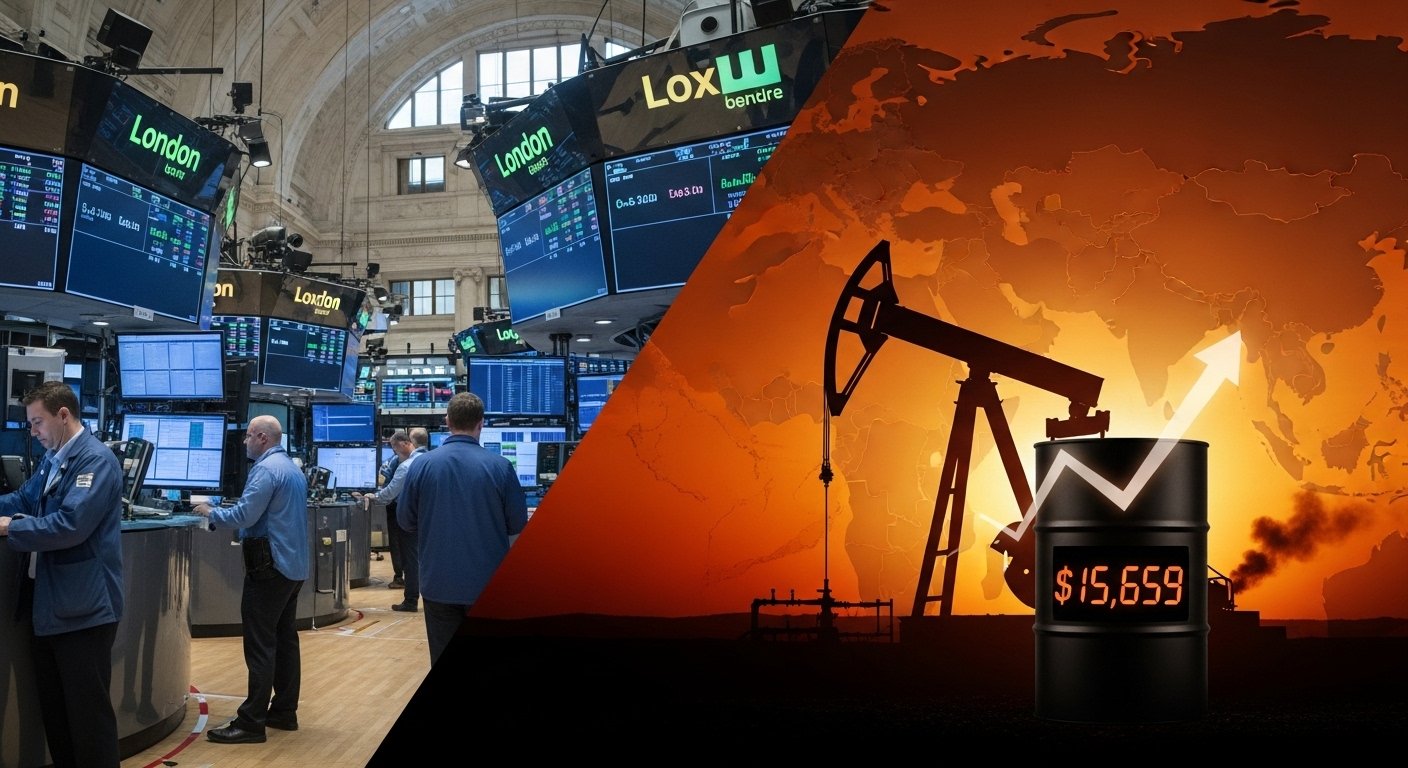
The UK stock market calms but oil prices rise over fears Iran war may drag on, creating a striking contrast in global financial markets. Investors in London appear to be regaining composure after initial volatility, yet energy markets are flashing warning signs. Rising crude prices signal deeper concerns about geopolitical risk, supply disruptions, and the potential for prolonged instability in the Middle East.
At first glance, the relative stability of the UK’s major indices might suggest confidence. However, beneath the surface, traders are recalibrating strategies amid growing uncertainty. The prospect that an Iran war may drag on is reshaping expectations around oil supply chains, inflationary pressures, and central bank policy decisions. As oil prices rise, they ripple through currency markets, bond yields, and corporate earnings forecasts.
This evolving situation highlights the delicate balance between investor optimism and global risk factors. While the UK stock market calms, it does so against a backdrop of escalating geopolitical tension. Understanding why oil prices are climbing, and what this means for British equities, is essential for investors navigating today’s uncertain landscape.
Why the UK Stock Market Calms Amid Global Tensions
When headlines warn that the Iran war may drag on, financial markets typically react sharply. Yet in this instance, the UK stock market calms after an initial bout of volatility. Several factors explain this resilience.
First, London’s benchmark index, the FTSE 100, is heavily weighted toward energy, mining, and multinational corporations. Many of these companies benefit directly from higher commodity prices. As oil prices rise, energy giants see improved revenue projections, which supports the broader index.
Second, investors appear to believe that while tensions are serious, a full-scale regional escalation remains contained for now. Markets often price in worst-case scenarios early, and when those scenarios do not immediately materialize, a degree of calm returns.
Third, institutional investors are increasingly focused on long-term fundamentals rather than short-term geopolitical noise. The UK stock market calms partly because traders expect central banks to remain data-driven, even if oil prices continue climbing.
Sector Rotation and Defensive Positioning
Another reason the UK stock market calms is sector rotation. Investors are shifting toward defensive stocks, including utilities, healthcare, and consumer staples. These sectors traditionally outperform during periods of uncertainty.
Energy companies, in particular, have become a focal point. As oil prices rise over fears Iran war may drag on, British-based oil majors gain attention from global investors seeking exposure to higher crude benchmarks. This inflow of capital helps offset weakness in travel, retail, and manufacturing stocks that could suffer from elevated fuel costs.
Oil Prices Rise as Iran War May Drag On
While equities stabilize, oil tells a different story. Oil prices rise sharply on concerns that the Iran war may drag on longer than initially anticipated. The Middle East remains central to global crude production, and any threat to shipping routes or infrastructure can have immediate consequences.
Benchmark crude contracts such as Brent Crude have reacted swiftly. Traders fear disruptions in the Strait of Hormuz, a critical chokepoint for global oil shipments. Even the perception of risk can push prices higher as supply uncertainty grows.
When oil prices rise, it reflects more than immediate supply constraints. It also captures market psychology. Energy traders are factoring in the possibility of sanctions, retaliatory strikes, and prolonged instability.

Supply Chain Vulnerabilities
Global oil supply chains are intricate and interconnected. If the Iran war may drag on, refiners and distributors worldwide must reconsider sourcing strategies. Shipping insurance premiums rise, freight costs increase, and contingency planning becomes essential.
Oil-producing nations may attempt to compensate for potential disruptions, but spare capacity is limited. This structural constraint amplifies price swings. As oil prices rise, import-dependent economies face renewed pressure.
For the UK, higher oil costs feed directly into energy bills, transportation expenses, and manufacturing overheads. While the UK stock market calms for now, sustained energy inflation could challenge that stability.
Impact on Inflation and Monetary Policy
One of the most significant implications when oil prices rise over fears Iran war may drag on is inflation. Energy is a foundational input cost across nearly all sectors. When crude benchmarks increase, downstream effects quickly follow.
The Bank of England monitors such developments closely. Policymakers face a dilemma: should they tighten monetary policy to counter inflationary pressures, or remain cautious to protect economic growth?
If the UK stock market calms today, it may be because investors assume central banks will avoid aggressive rate hikes unless absolutely necessary. However, persistent oil price increases could reignite inflation concerns, complicating future policy decisions.
Consumer Confidence and Spending
Higher fuel and heating costs reduce disposable income. If the Iran war may drag on, prolonged oil price strength could dampen consumer confidence. Retailers and hospitality businesses might feel the squeeze.
At the same time, the UK stock market calms partly because wage growth and employment levels remain relatively stable. For now, households appear resilient. The key question is duration. Short-term spikes are manageable; long-term energy inflation is more problematic.
Currency Markets and the Pound Sterling
As oil prices rise, currency markets also respond. The Pound sterling often reflects shifts in global risk appetite. A stable pound can cushion imported inflation, but excessive volatility may add another layer of uncertainty.
If the Iran war may drag on, safe-haven currencies such as the US dollar could strengthen. This dynamic influences commodity pricing, as oil is typically traded in dollars. A stronger dollar can amplify price effects for non-dollar economies.
The UK stock market calms partly because foreign investment flows remain steady. International investors still view London as a liquid and diversified market. However, sustained geopolitical stress could test that perception.
Energy Stocks Benefit as Oil Prices Rise
One clear beneficiary when oil prices rise over fears Iran war may drag on is the energy sector. Companies engaged in exploration, production, and refining often see immediate gains in share prices.
Within the FTSE 100, major oil producers provide a natural hedge against global turmoil. Their revenues increase alongside crude benchmarks, supporting dividends and share buybacks.
This dynamic explains why the UK stock market calms even as geopolitical tensions escalate. The composition of the index matters. Energy heavyweights counterbalance weakness elsewhere.
Investment Flows into Commodities
Beyond equities, investors are reallocating funds into commodities. Oil, natural gas, and even gold attract capital during periods of uncertainty. The perception that the Iran war may drag on reinforces demand for tangible assets.
Oil exchange-traded funds experience inflows as traders seek exposure to price momentum. These capital movements reinforce the upward trajectory in crude markets.
Global Market Reactions
The UK stock market calms in contrast to sharper swings seen elsewhere. European and Asian markets have experienced mixed reactions, depending on energy dependency and trade exposure.
Emerging markets reliant on oil imports face heightened vulnerability. Rising crude costs can strain fiscal balances and weaken currencies. Meanwhile, oil-exporting nations benefit from improved trade revenues.
The interconnected nature of global finance means that if oil prices rise significantly and persistently, secondary effects will emerge. Bond yields may increase as inflation expectations shift. Corporate borrowing costs could edge higher.
Investor Strategy in Uncertain Times
When headlines emphasize that the Iran war may drag on, prudent investors reassess portfolios. Diversification becomes critical. Exposure to energy stocks, defensive sectors, and global assets can reduce volatility.
The fact that the UK stock market calms suggests that professional investors are not panicking. Instead, they are adjusting allocations methodically. This measured response reflects experience from past geopolitical crises.
Long-Term vs Short-Term Outlook
Short-term traders focus on daily price swings. Long-term investors, however, examine structural implications. If oil prices rise temporarily, markets may absorb the shock. If the Iran war may drag on for months or years, economic modeling changes significantly.
Energy transition policies could accelerate as governments seek greater independence from volatile regions. Renewable energy investments may gain renewed urgency, even as fossil fuel producers enjoy short-term gains.
Could Volatility Return?
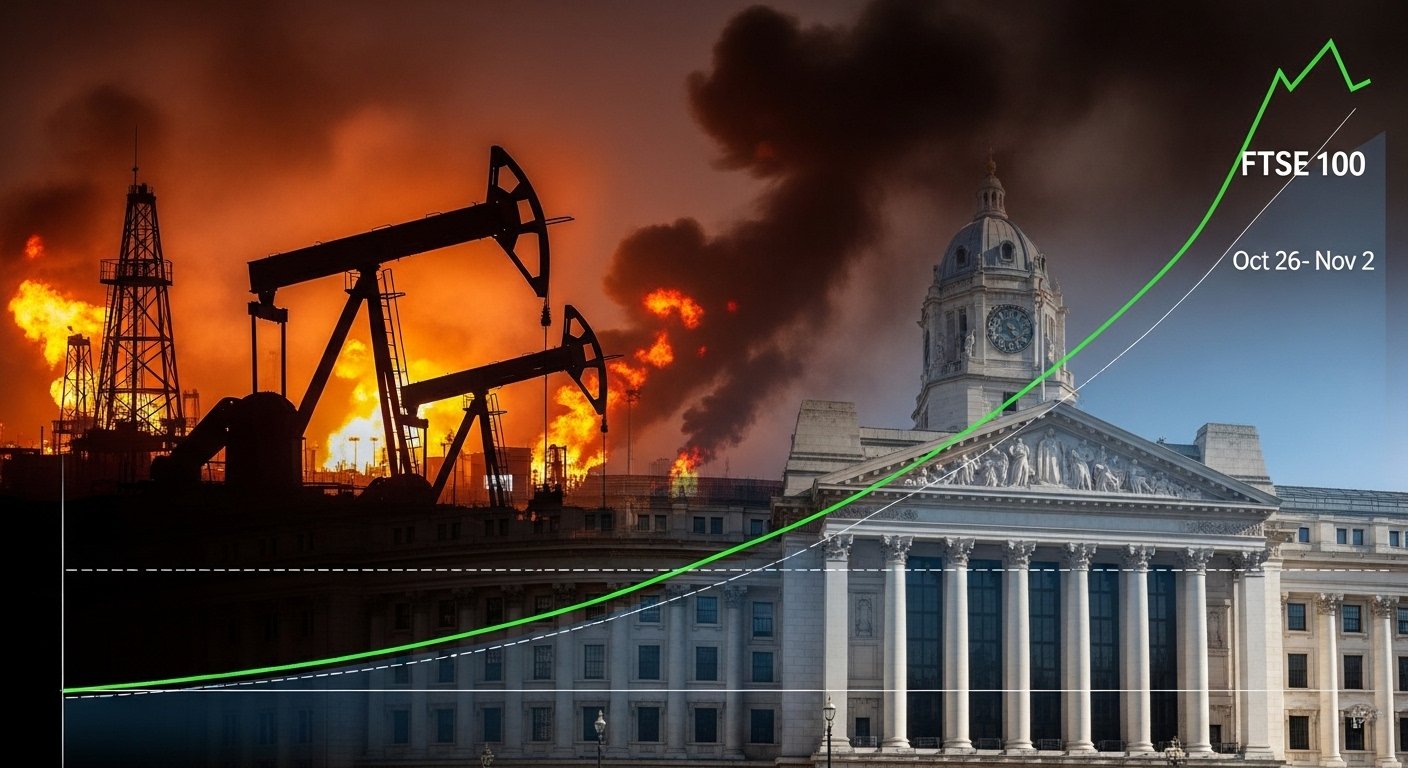
Although the UK stock market calms today, volatility can reappear quickly. A single escalation event could reverse investor sentiment. Markets are inherently forward-looking, and unexpected developments reshape projections instantly.
Oil prices rise not only on actual disruptions but also on perceived risk. Therefore, news flow remains critical. Traders monitor diplomatic signals, military movements, and global alliances closely. If tensions ease, oil may retrace gains, and cyclical sectors could rally. If the Iran war may drag on, defensive positioning will likely intensify.
The Broader Economic Implications
The broader economy stands at a crossroads. Rising oil prices influence transportation, agriculture, manufacturing, and services. Inflation dynamics could shift, impacting wage negotiations and consumer spending patterns.
The UK stock market calms partly because economic data remains stable. However, sustained energy-driven inflation could alter that narrative. Policymakers must balance growth and price stability carefully.
Businesses are already reviewing contingency plans. Supply chain resilience, alternative energy sourcing, and cost-control strategies are under discussion across boardrooms.
Conclusion
The narrative that the UK stock market calms but oil prices rise over fears Iran war may drag on captures the dual nature of today’s financial landscape. Equity markets in London show resilience, supported by strong energy stocks and measured investor sentiment. Meanwhile, crude benchmarks climb as geopolitical uncertainty intensifies.
This divergence underscores the complexity of global markets. While the UK stock market calms for now, the trajectory of oil prices remains closely tied to developments in the Middle East. If tensions persist, inflation, monetary policy, and consumer confidence may all feel the effects.
Investors must remain vigilant, diversified, and informed. In a world where oil prices rise quickly on geopolitical fears, adaptability is essential. The coming months will reveal whether stability in London can endure or whether renewed volatility lies ahead.
FAQs
Q;Why does the UK stock market calm even when oil prices rise?
The UK stock market calms partly because energy companies form a significant portion of major indices like the FTSE 100. Higher oil prices often boost their profits, offsetting losses in other sectors.
Q;How could the Iran war dragging on affect global oil prices?
If the Iran war may drag on, supply disruptions and shipping risks in the Middle East could persist, keeping oil prices elevated due to uncertainty and constrained output.
Q; What impact do rising oil prices have on UK inflation?
When oil prices rise, transportation and production costs increase, potentially driving up consumer prices and influencing decisions by the Bank of England.
Q; Could higher oil prices lead to interest rate hikes?
Yes, sustained oil price increases may contribute to inflation, which could prompt central banks to consider tightening monetary policy if price pressures intensify.
Q; Is the current calm in the UK stock market likely to last?
The UK stock market calms for now, but future stability depends on geopolitical developments, oil price trends, and central bank responses to evolving economic conditions.
